Skip to content
The Netherlands Beneath Your Feet

Sacred places

Sacred places in North Holland

Faith and ritual shaped the landscape of North Holland for centuries. Villages grew around churchyards, towers became landmarks and people travelled to springs, chapels and graves believed to hold special meaning. In towns, monumental churches rose while more private worlds of worship also developed behind ordinary façades. These places show how prayer, illness, hope, death, music, persecution and community left tangible traces that can still be visited and read today.

View the sacred places ↓

How faith shaped the landscape

For centuries, a church was far more than a building for worship. Around it lay the churchyard, the market and often the oldest houses in a village. Children were baptised inside, marriages were celebrated and the dead were buried. The tower defined the skyline and the bells marked the rhythm of the day. Sacred places therefore became fixed points in surroundings that were otherwise constantly changing.

Faith also left traces beyond the villages. A spring could become a pilgrimage site, a field a place of remembrance for a saint and a monastery a centre of farming, care, education and government. Look at where such places lie and you can often understand why they emerged there: on an old coastal ridge, beside a waterway, in the heart of a town or where a miracle was remembered.

The buildings and sites on this page are therefore not a loose collection of monuments. Together, they show how faith helped determine where people lived, gathered, travelled and buried their dead.

More than churches

Sacred places in North Holland take many forms. Grote Kerk Alkmaar and Grote of Sint-Bavokerk Haarlem show the scale and ambition of medieval urban churches. Maartenskerk on Texel and Witte Kerk in Heiloo show instead how an old church site can become inseparable from a village and its landscape.

There are also places where the sacred is less visible. Ons’ Lieve Heer op Solder is hidden inside a canal house. Heilige Stede has almost completely disappeared from the streetscape but survives in the annual Stille Omgang. At Adelbertusakker and Onze Lieve Vrouw ter Nood, meaning lies not only in a building but also in water, tradition and recurring pilgrimage.

Portugese Synagoge and Begijnhof broaden the story further. They show that religious heritage belongs neither to a single faith community, architectural style nor historical period. The selection focuses on places where religious meaning can still be read on site in a building, landscape, ritual, memory or continued use.

Fault lines of the Reformation and religious tolerance

From the sixteenth century onwards, the Reformation transformed the religious landscape profoundly. Catholic churches passed into Protestant hands, altars and images disappeared and public Catholic worship was prohibited. In Bergen that rupture remains literally visible: the choir of Ruïnekerk was restored, while the walls of the destroyed nave were left standing as an open ruin.

Faith did not disappear when it was pushed out of public view. Catholics gathered in hidden churches that were barely recognisable from the outside. In seventeenth-century Amsterdam, the Sephardic Jewish community, by contrast, built a large and visible house of prayer. Portugese Synagoge thus became an exceptional monument to Jewish religious life in the city.

It is precisely the succession of Catholic, Protestant and Jewish layers that makes these places so rich. A building can change function without entirely losing its earlier history.

How to read a sacred place

When visiting, do not look only at the façade. Look upwards at vaults, organs, roof turrets and paintings, but also downwards at gravestones, worn floors and changes in level. In old churches, heaven and death often lie quite literally above and below the visitor.

Notice what is missing as well. Low stone lines can mark the outline of a vanished chapel. An empty space may once have held an altar. A courtyard behind a gate may recall a community that deliberately lived beyond the public street. Even a name can be the last trace of a vanished devotion.

The surroundings are part of the story. A raised churchyard, a spring beside a chapel or a church rising above an old village helps explain why people continued to use and remember precisely this place.

Places where faith can still be read in the landscape

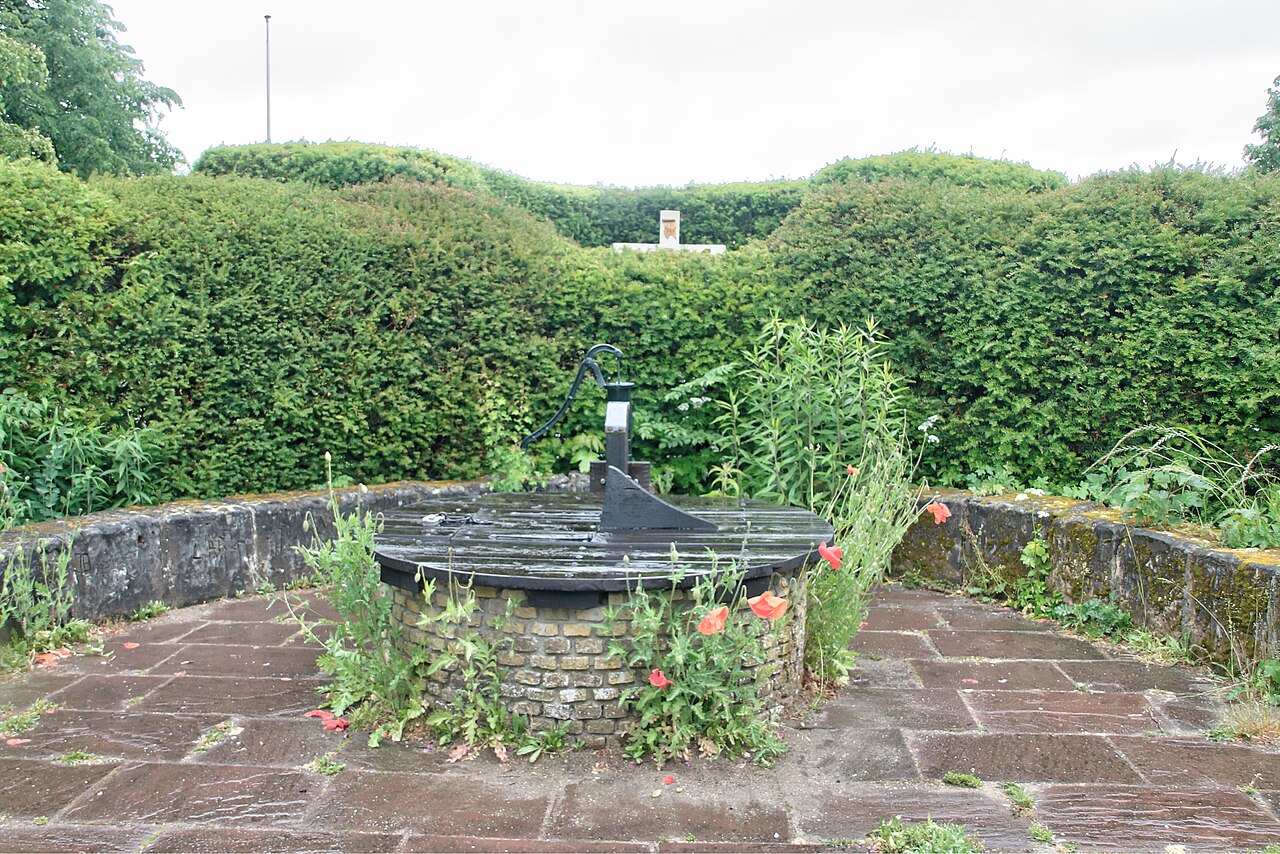
The Adelbertus spring on the Adelbertusakker in Egmond-Binnen

Photo: Gmhogervorst

Credit: Photo: Gmhogervorst, via Wikimedia Commons, CC BY-SA 4.0

Licence: CC BY-SA 4.0

Changes: No changes.

Source ↗

Sacred places

Adelbertusakker, near Egmond-Binnen

Egmond-Binnen

On the edge of Egmond-Binnen lies the Adelbertusakker: a small, quiet site centred on the Adelbertus spring, the outlines of a vanished chapel and the memory of Saint Adelbert. According to tradition, Adelbert was buried here and, after his remains were raised and transferred, a spring welled up at the burial place. The site shows how water, veneration of his burial place, pilgrimage, local devotion and care gave this small piece of ground meaning for centuries.

View this place
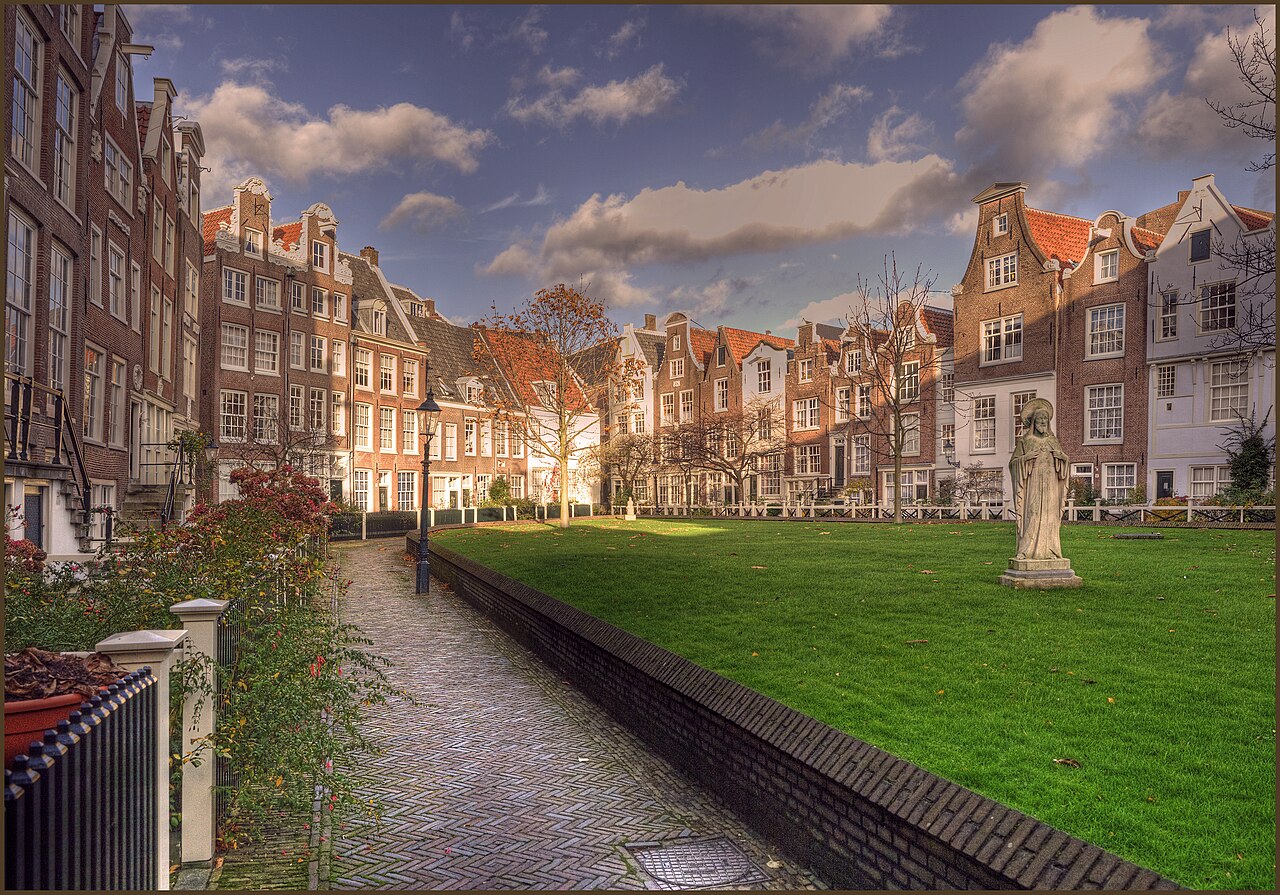
Houses around the quiet Begijnhof courtyard in Amsterdam

Photo: Bert K.

Credit: Photo: Bert K., via Wikimedia Commons, CC BY 2.0

Licence: CC BY 2.0

Changes: No changes.

Source ↗

Sacred places

Begijnhof Amsterdam

Amsterdam

Behind a gate in Amsterdam’s busy city centre lies the Begijnhof. For centuries, beguines lived, worked and prayed around its quiet lawn. These religious women led an independent life within the city. The old houses, the English Reformed Church and the hidden Catholic chapel preserve a history of faith, independence and Catholic life behind ordinary façades.

View this place
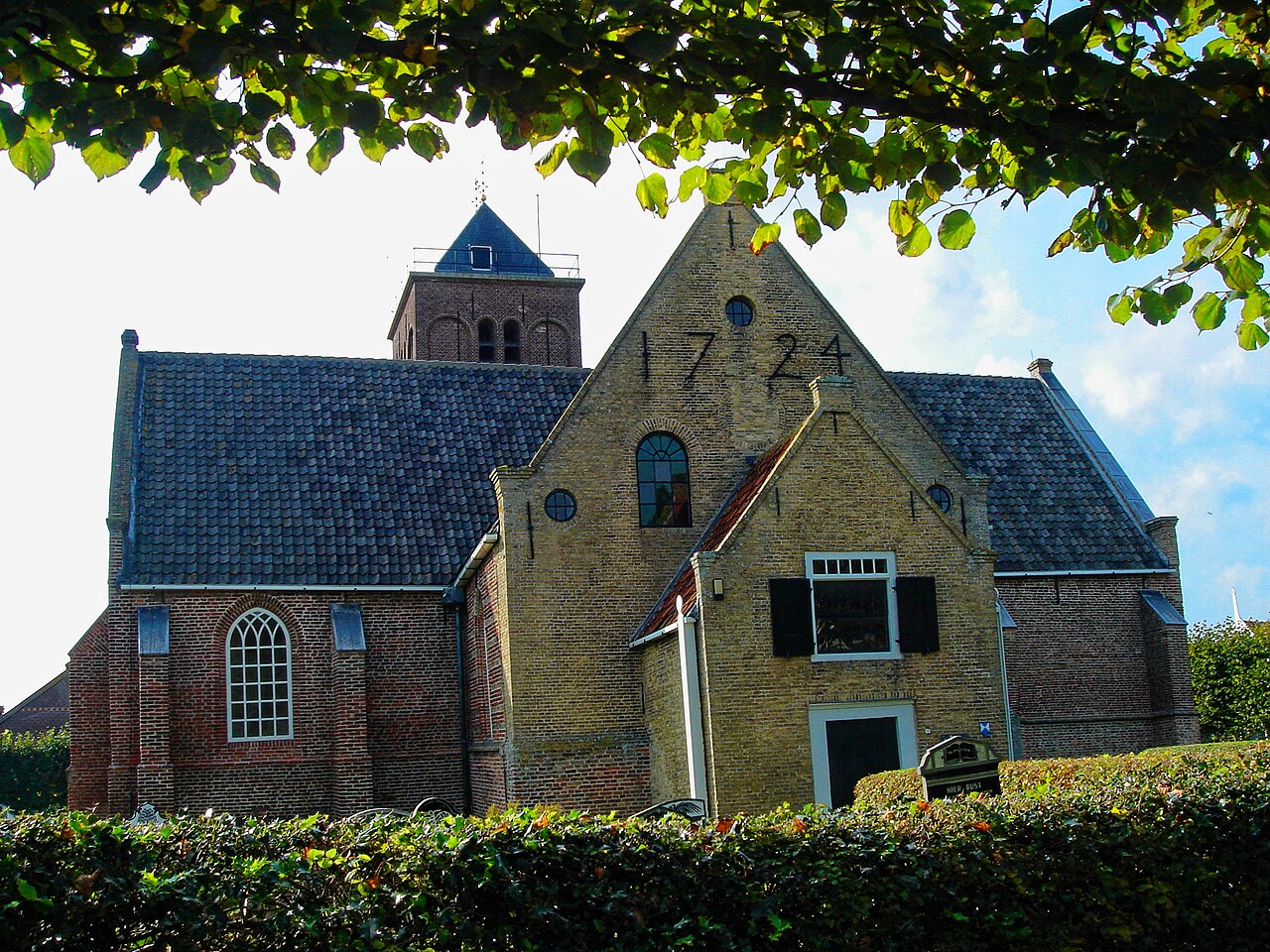
The Maartenskerk in Oosterend on Texel, seen from Kerkstraat

Photo: Txllxt TxllxT

Credit: Photo: Txllxt TxllxT, via Wikimedia Commons, CC BY-SA 4.0

Licence: CC BY-SA 4.0

Changes: No changes.

Source ↗

Sacred places

Village Church of Oosterend, Texel

Oosterend

In the centre of Oosterend stands the Maartenskerk, regarded as the oldest surviving church on Texel. On its raised churchyard, medieval tuff, later brickwork and centuries of Catholic and Protestant use come together. People were baptised and married here, and their dead were buried around the church. The same church site therefore remained the religious heart of the village even as the form of worship changed.

View this place
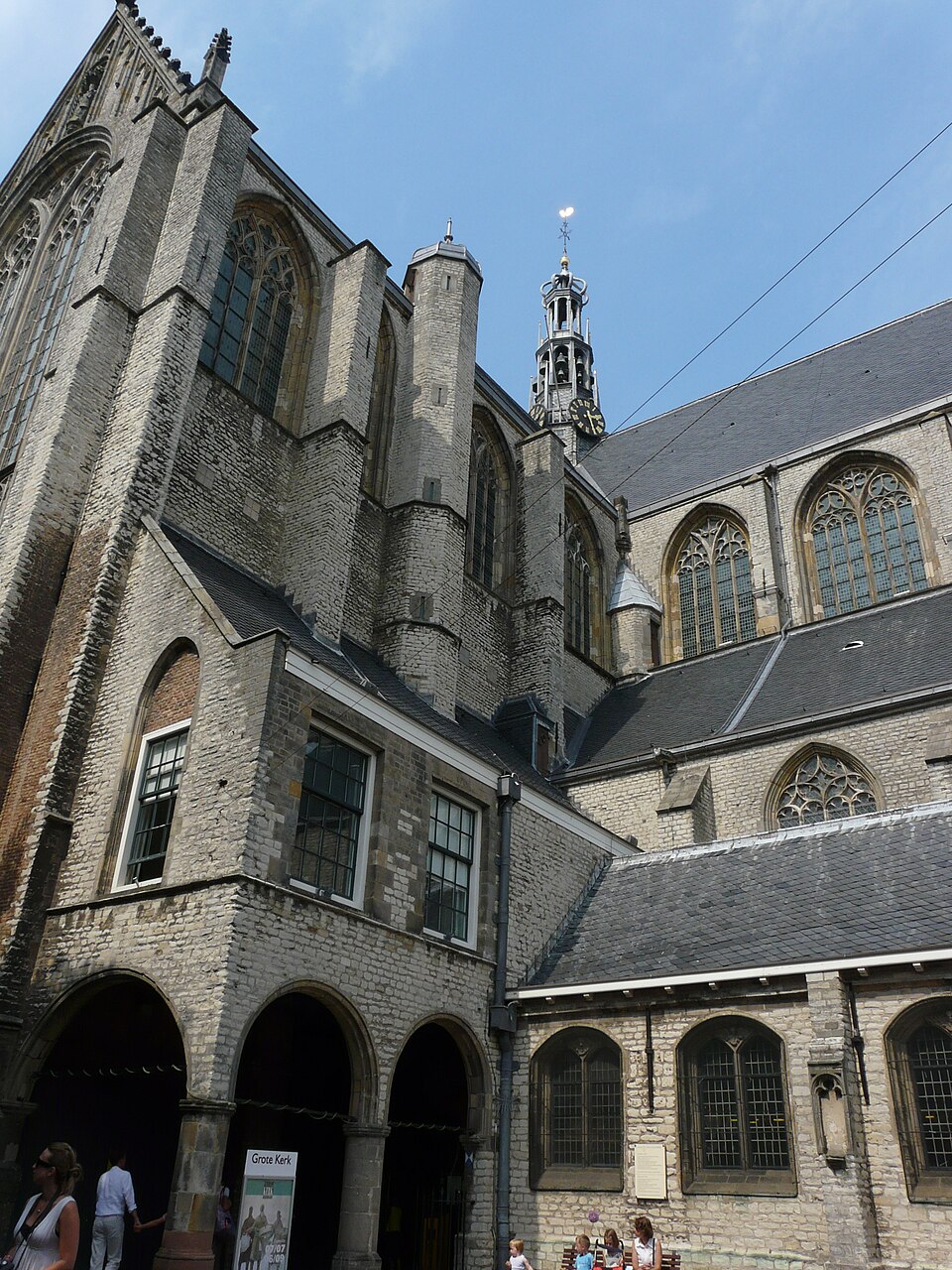
Grote Sint-Laurenskerk in Alkmaar seen from the church square

Photo: G.Lanting

Credit: Photo: G.Lanting, via Wikimedia Commons, CC BY-SA 3.0

Licence: CC BY-SA 3.0

Changes: No changes.

Source ↗

Sacred places

Grote Kerk Alkmaar

Alkmaar

In the heart of Alkmaar stands Grote Kerk Alkmaar, also known as the Grote Sint-Laurenskerk: a monumental late-medieval church that formed the religious, civic and musical heart of the city for centuries. Originally dedicated to Saint Lawrence and later a centre of Protestant worship, the church still carries traces of both worlds. Step inside and you see high vaults, centuries-old organs, grave slabs and paintings. Together they tell how Alkmaar prayed, mourned and listened to music here for centuries.

View this place
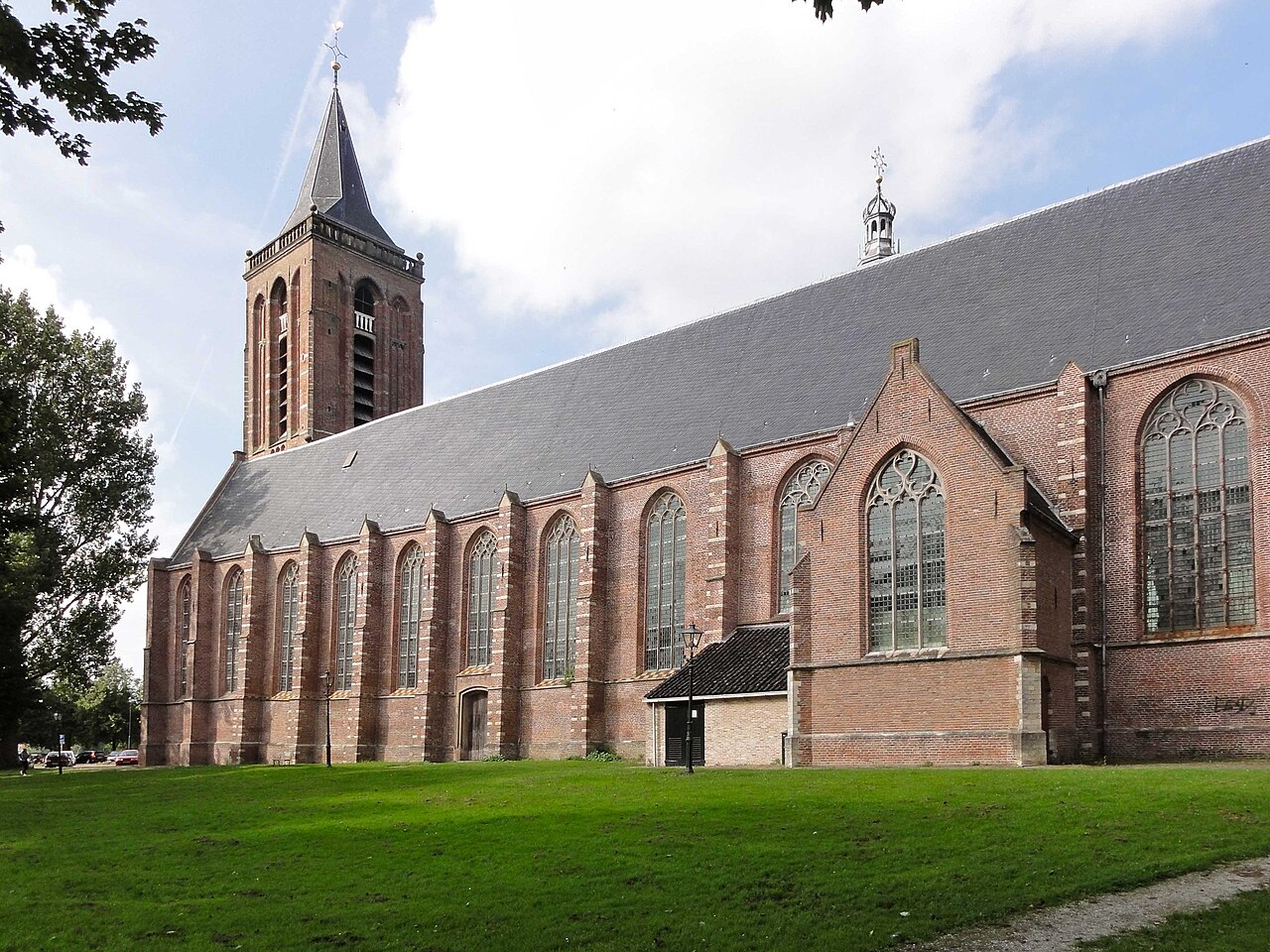
The Great or Saint Nicholas Church of Monnickendam seen from outside

Photo: Gouwenaar

Credit: Photo: Gouwenaar, via Wikimedia Commons, CC0 1.0

Licence: CC0 1.0

Changes: No changes.

Source ↗

Sacred places

Great Church of Monnickendam

Monnickendam

On De Zarken stands a church far larger than present-day Monnickendam might lead you to expect. The late Gothic hall church grew from the fifteenth century onwards with a harbour town shaped by water, trade, guilds and faith. Inside, the gravestones, old baptismal font, richly carved choir screen, reserved pews and Gerstenhauer organ tell of centuries of worship, mourning, civic power and music.

View this place
The Great or Saint Bavo Church in Haarlem, seen from the south side

Photo: Dosseman / Dick Osseman

Credit: Photo: Dosseman / Dick Osseman, via Wikimedia Commons, CC BY-SA 4.0

Licence: CC BY-SA 4.0

Changes: No changes.

Source ↗

Sacred places

Great or Saint Bavo Church, Haarlem

Haarlem

In the middle of Haarlem’s Grote Markt stands the Great or Saint Bavo Church: a late-medieval city church where faith, death, music and civic pride have met for centuries. Hundreds of gravestones lie beneath the high timber vault. Old choir stalls, the brass choir screen and the monumental Müller organ show how Haarlem repeatedly adapted this space without completely erasing its earlier layers.

View this place
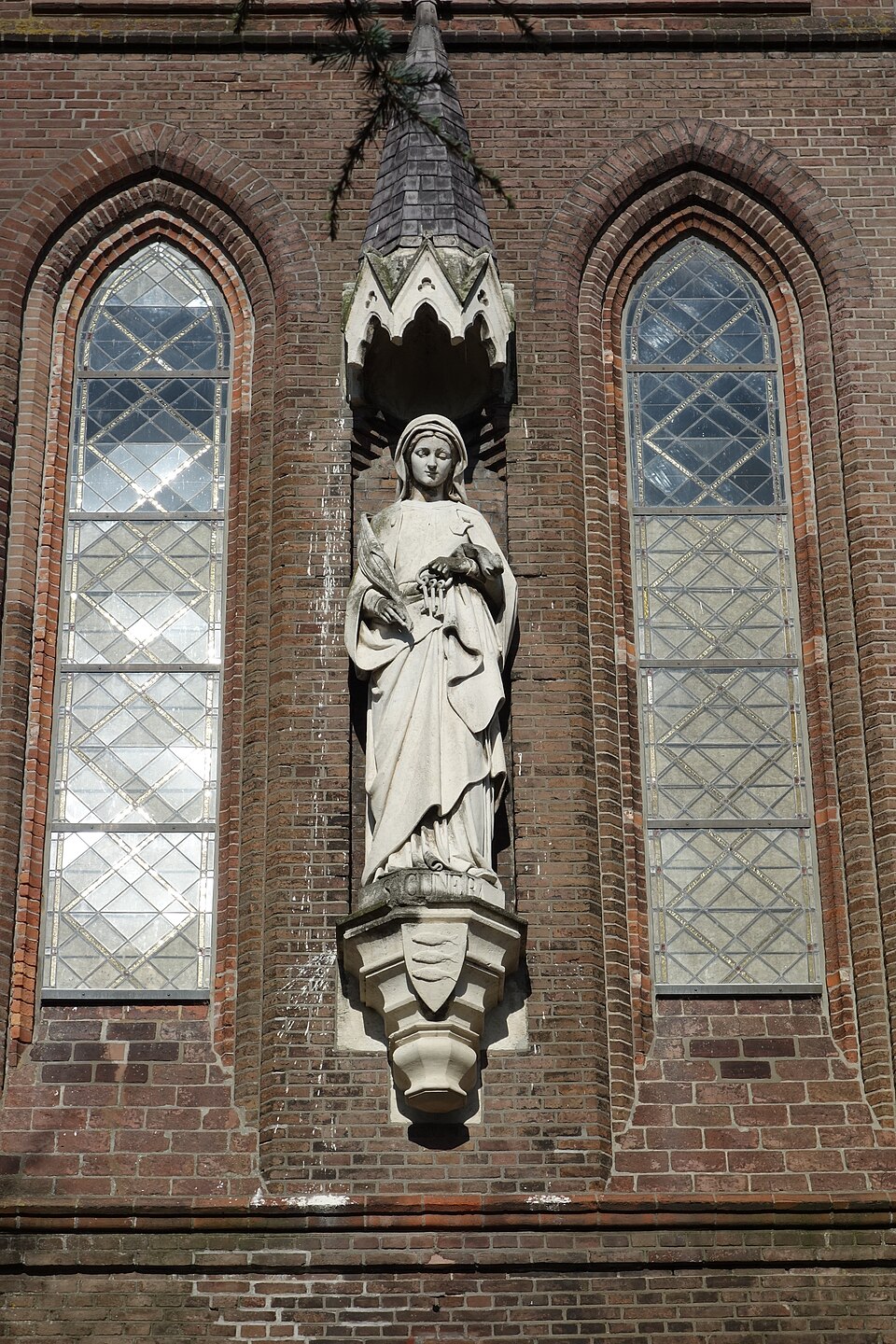
Statue of Cunera on the façade of Sint-Cunerakerk in Nibbixwoud

Photo: Dqfn13

Credit: Photo: Dqfn13, via Wikimedia Commons, CC BY-SA 4.0

Licence: CC BY-SA 4.0

Changes: No changes.

Source ↗

Sacred places

St Cunera of Nibbixwoud – the saint of livestock

Nibbixwoud

For centuries, livestock was gathered and blessed around Sint-Cunerakerk in Nibbixwoud on 12 June. Farmers entrusted their animals to Cunera’s protection. The procession and livestock blessing have disappeared, but the church, the statue of the saint and the historic agricultural village ribbon preserve the memory of this unusual West Frisian devotion.

View this place
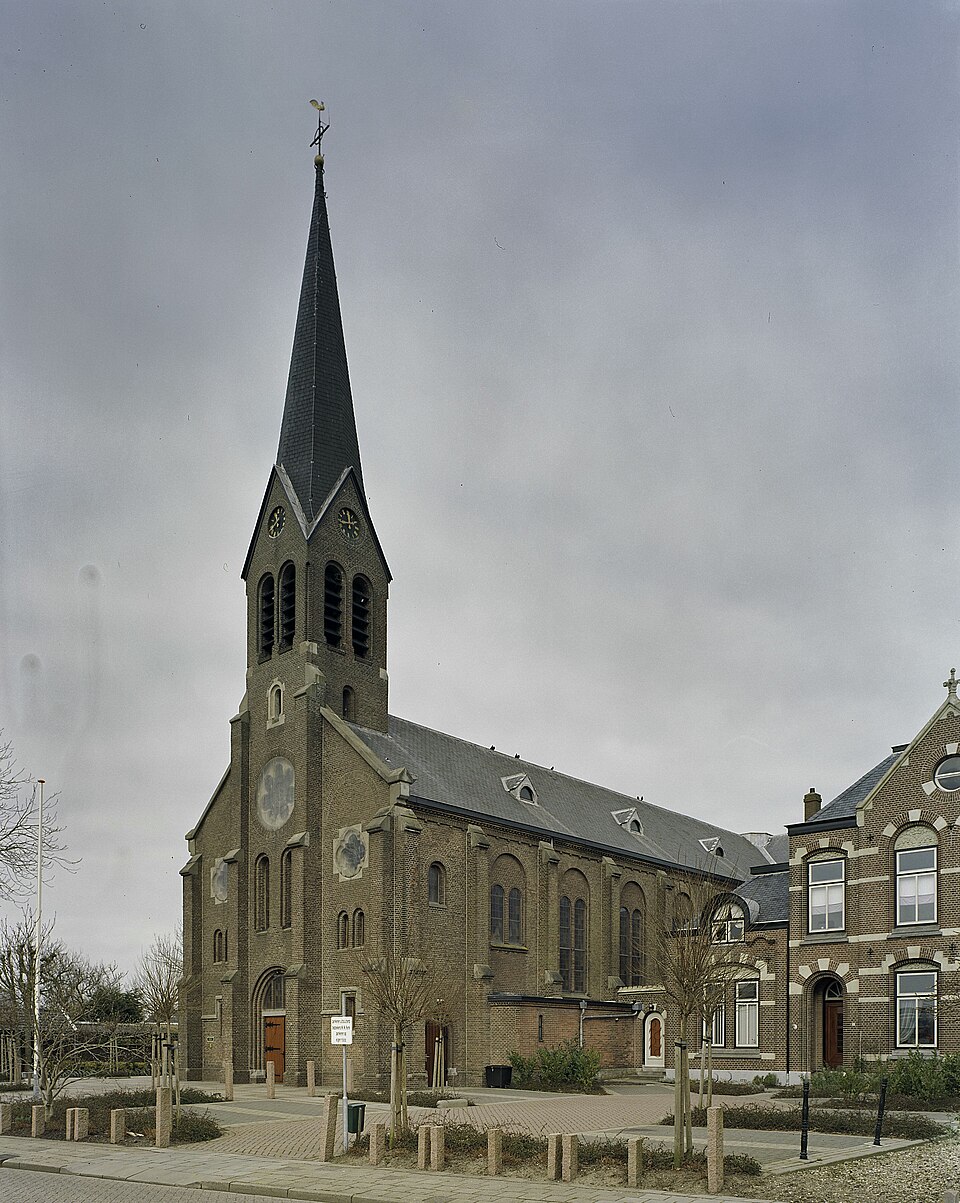
Maria Magdalena Church on Dorpsstraat in Wormer

Photo: Gerard Dukker / Cultural Heritage Agency of the Netherlands

Credit: Photo: Gerard Dukker / Cultural Heritage Agency of the Netherlands, via Wikimedia Commons, CC BY-SA 4.0

Licence: CC BY-SA 4.0

Changes: No changes.

Source ↗

Sacred places

St Odulphus of Wormer – a vanished sailors’ devotion

Wormer

At Maria Magdalena Church in Wormer, the memory survives of a vanished devotion to St Odulphus. Before the Reformation, he was invoked here especially by sailors. Around his feast day on 12 June, an annual procession passed through the village carrying his image. The devotion disappeared from public view, yet it still belongs to Wormer as a water village shaped by fishermen, sailors, lakes, dykes and trading routes.

View this place
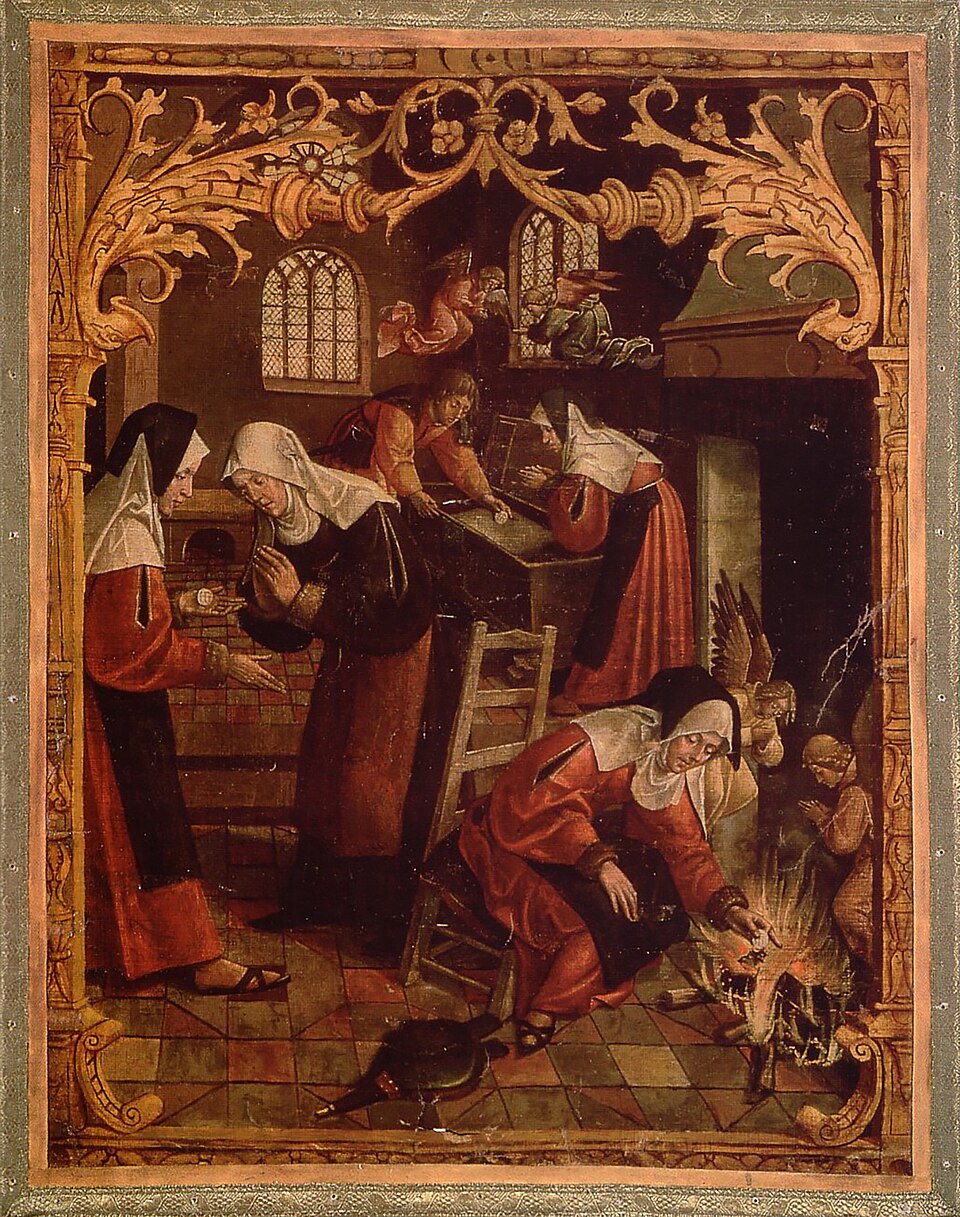
Painting of the Miracle of Amsterdam showing a woman retrieving the unharmed host from the hearth fire

Photo: Unknown artist

Credit: Image: unknown artist, via Wikimedia Commons, public domain

Licence: Public Domain Mark 1.0

Changes: No changes.

Source ↗

Sacred places

Heilige Stede and the Miracle of Amsterdam

Amsterdam

In a house on Kalverstraat, a consecrated host was said to have emerged unharmed from a fire in 1345. The Chapel of the Heilige Stede was built on the site and became an important place of pilgrimage for centuries. The chapel disappeared, but the story lives on in the Mirakelkolom and the Stille Omgang.

View this place
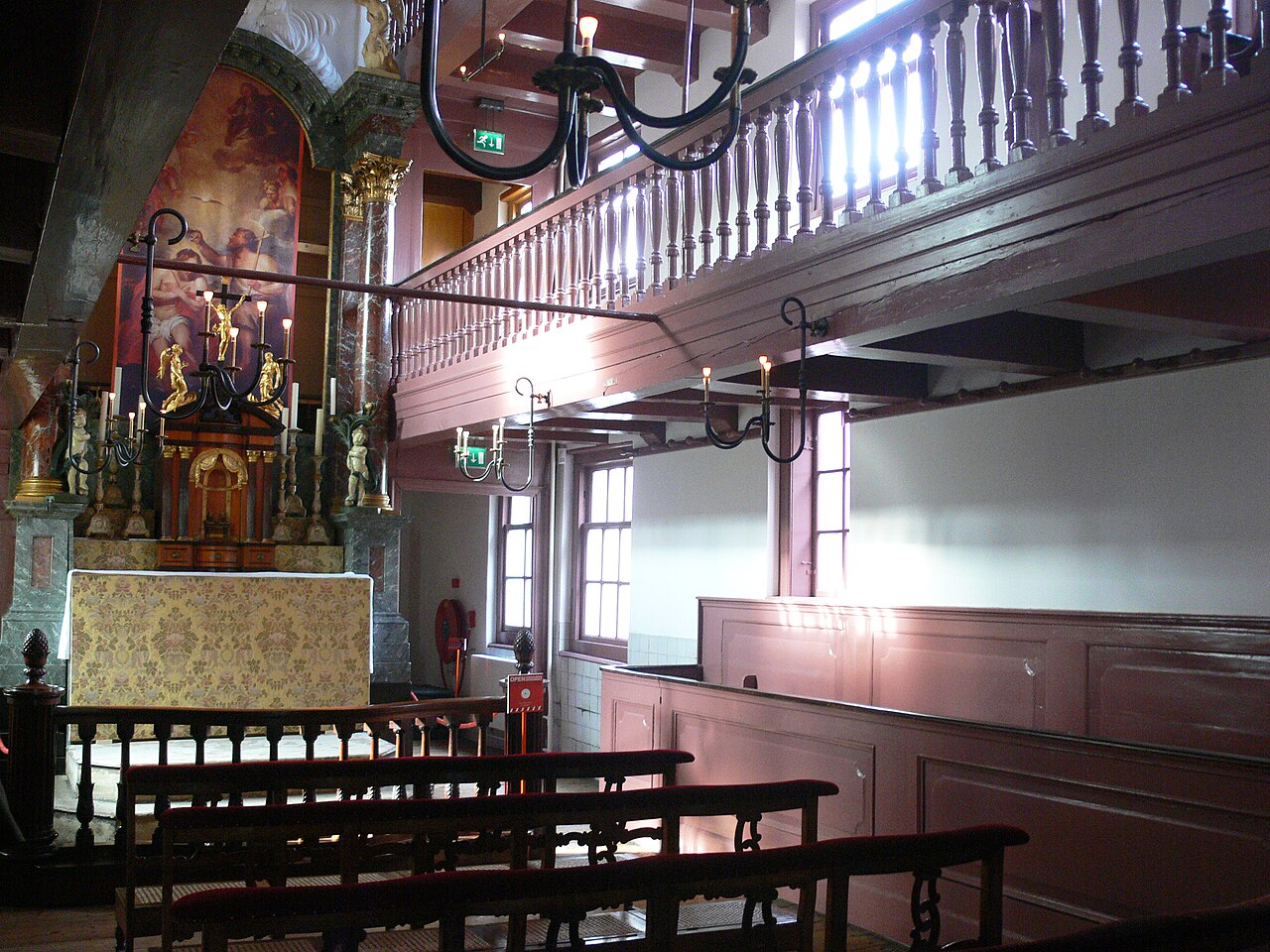
Interior of the hidden church of Ons’ Lieve Heer op Solder in Amsterdam

Photo: Remi Mathis

Credit: Photo: Remi Mathis, via Wikimedia Commons, CC BY-SA 3.0

Licence: CC BY-SA 3.0

Changes: No changes.

Source ↗

Sacred places

Ons’ Lieve Heer op Solder in Amsterdam

Amsterdam

On Oudezijds Voorburgwal, this looks like an ordinary Amsterdam canal house. Follow the narrow stairs and suddenly, at the top, you find yourself inside a complete Catholic church. Here, faith was not visible from the street, but hidden beneath the roof.

View this place
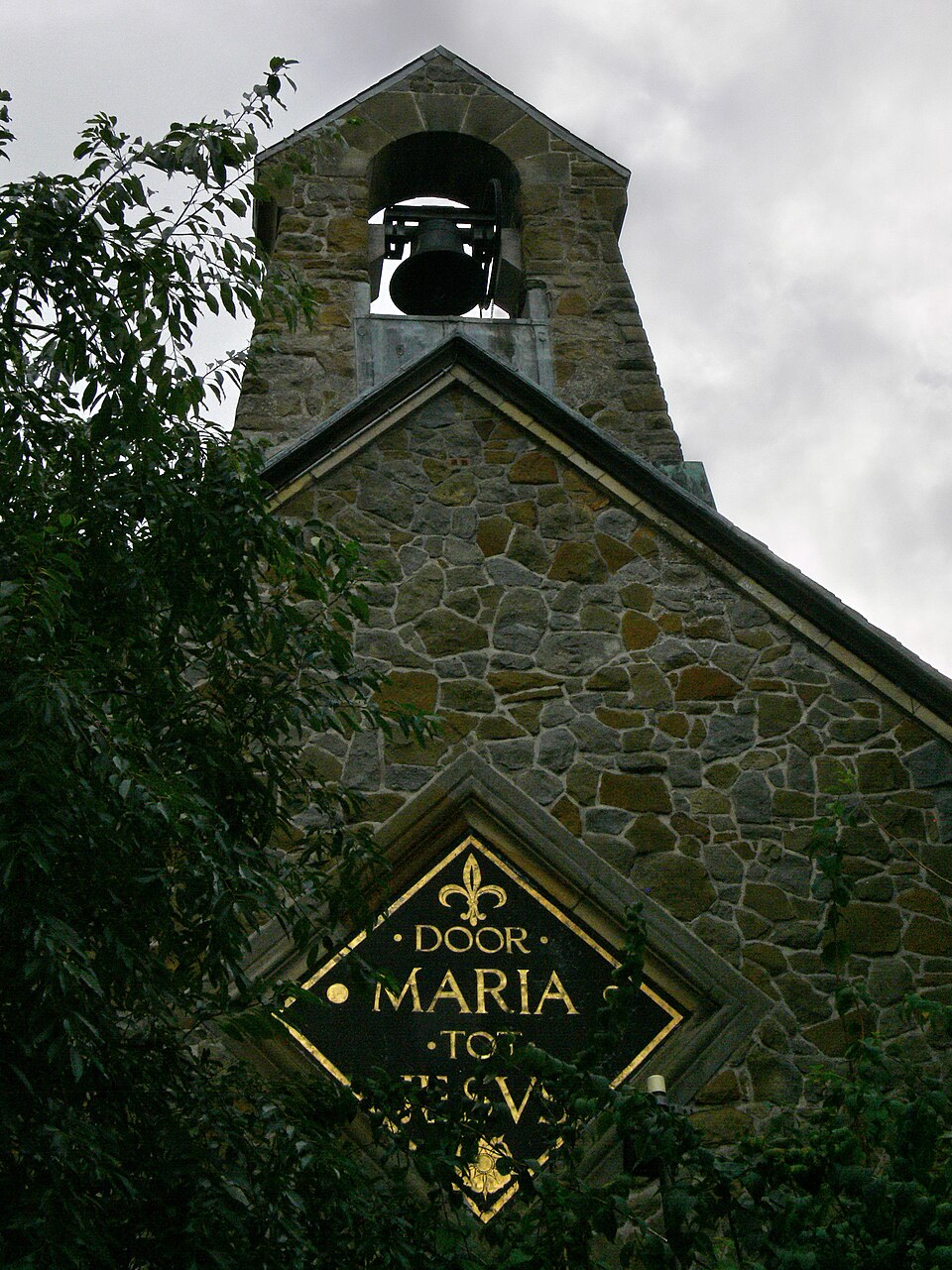
Rear façade and bell frame of the Chapel of Grace of Onze Lieve Vrouw ter Nood in Heiloo

Photo: M.arjon

Credit: Photo: M.arjon, via Wikimedia Commons, CC BY-SA 3.0 NL

Licence: CC BY-SA 3.0 NL

Changes: No changes.

Source ↗

Sacred places

Onze Lieve Vrouw ter Nood in Heiloo

Heiloo

Onze Lieve Vrouw ter Nood is located on Kapellaan in Heiloo, one of the most important Marian pilgrimage sites in the Netherlands. Around the Chapel of Grace, the Runxput well and the quiet park, centuries-old stories, destruction and revival come together. People still come here to pray, give thanks or simply spend a moment in silence.

View this place
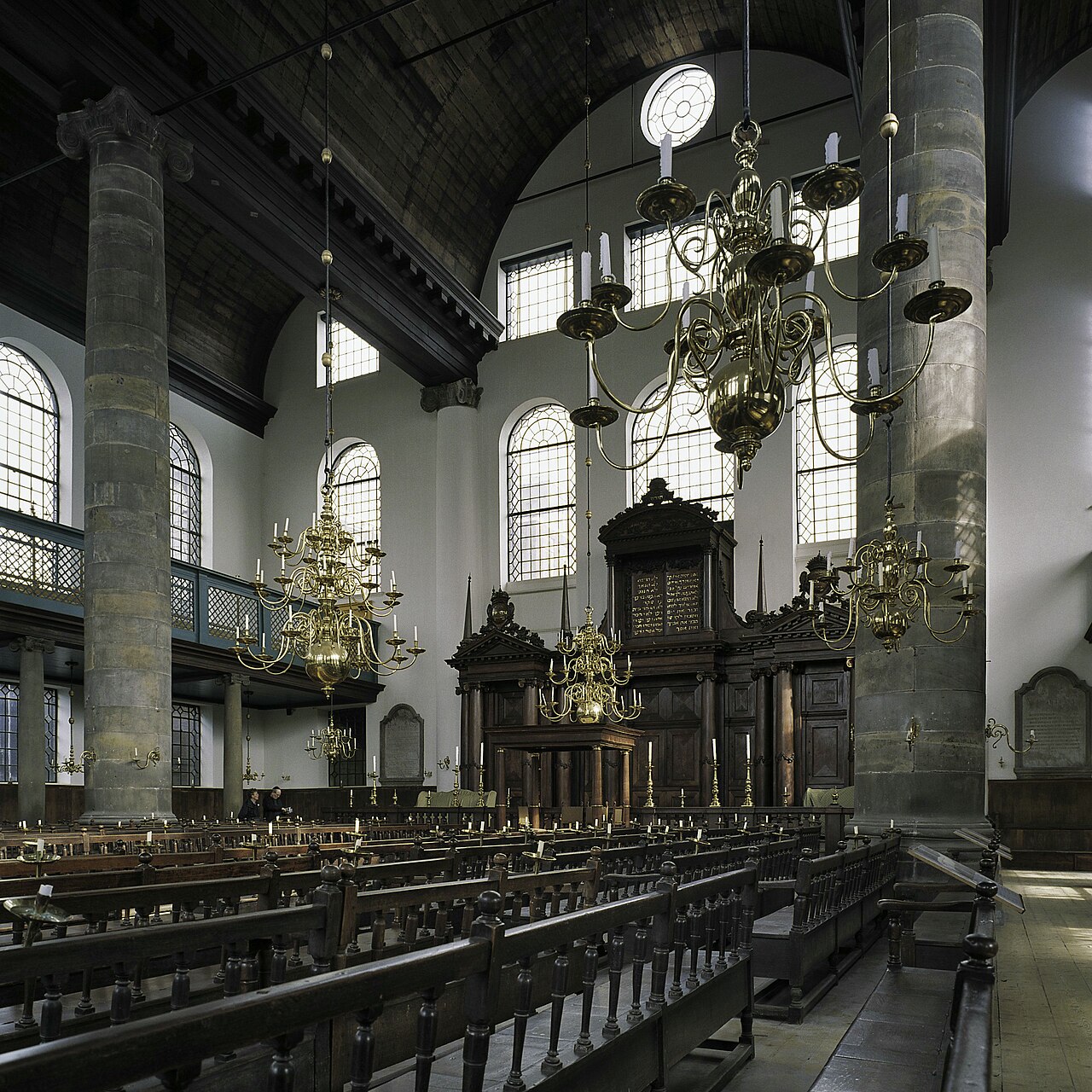
Interior of the Portugese Synagoge in Amsterdam with wooden barrel vault, brass candle chandeliers and hechal

Photo: Sergé Technau / Cultural Heritage Agency of the Netherlands

Credit: Photo: Sergé Technau / Cultural Heritage Agency of the Netherlands, via Wikimedia Commons, CC BY-SA 4.0

Licence: CC BY-SA 4.0

Changes: No changes.

Source ↗

Sacred places

Portugese Synagoge Amsterdam

Amsterdam

Behind the sober walls on Mr Visserplein lies a place of worship shaped by wood, sand, brass and candlelight. The Portugese Synagoge is also known as the Esnoga or Snoge. It was built between 1671 and 1675 for Amsterdam’s Sephardic Jewish community. Inside, the high barrel vault, brass chandeliers, hechal and tebá immediately draw the eye. The synagogue is still used for religious services.

View this place
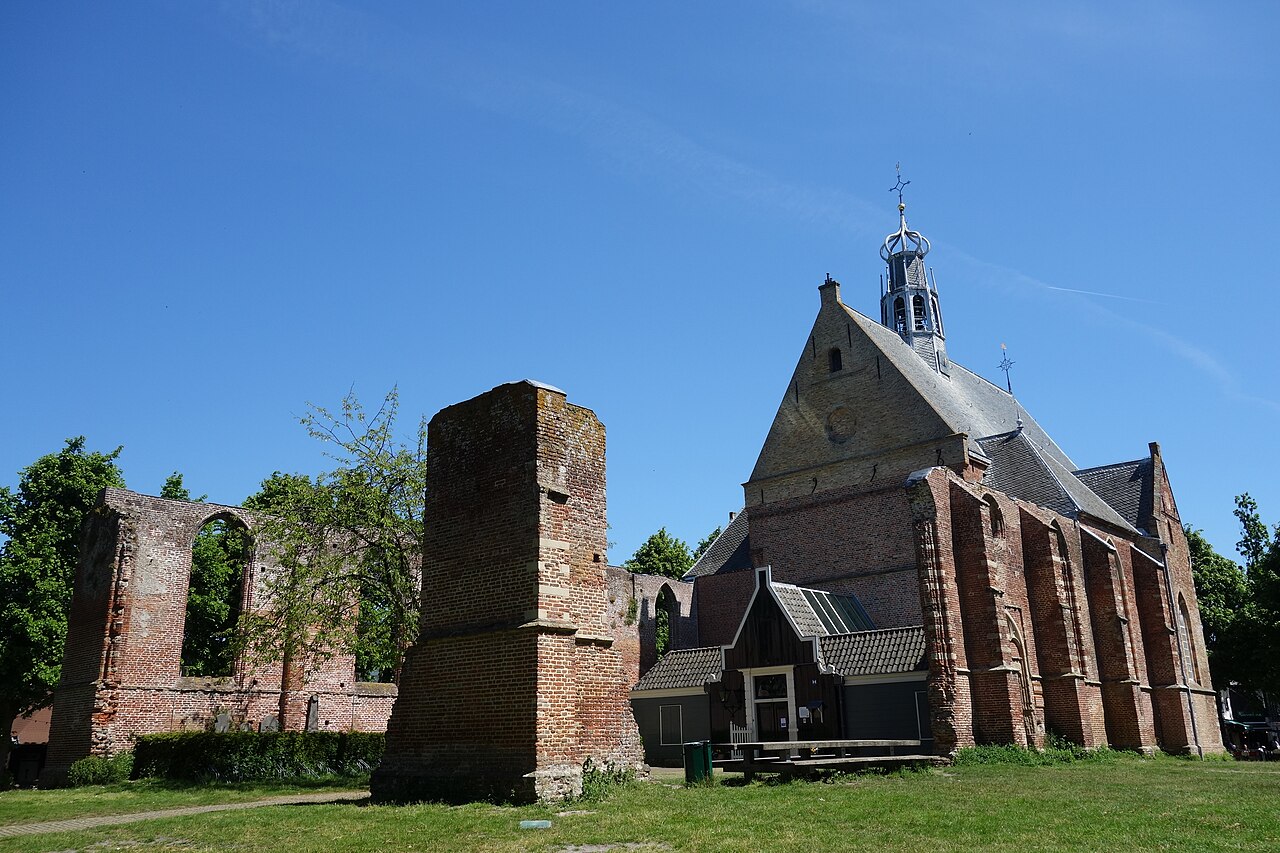
Ruined Church of Bergen in Bergen with the restored choir and the ruined walls of the vanished nave

Photo: Dqfn13

Credit: Photo: Dqfn13, via Wikimedia Commons, CC BY-SA 4.0

Licence: CC BY-SA 4.0

Changes: No changes.

Source ↗

Sacred places

Ruined Church of Bergen

Bergen

At first sight, the Ruined Church looks like an old village church. Only when you walk around the building do you discover that most of it is missing. Where the nave and tower once stood, you now look up at the open sky between low walls. The choir remained a church. The rest became memory.

View this place
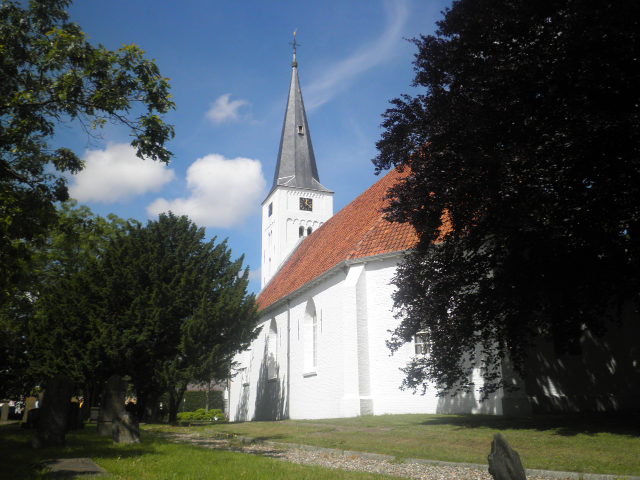
The White Church of Heiloo with tower and white exterior walls

Photo: Dqfn13

Credit: Photo: Dqfn13, via Wikimedia Commons, CC BY-SA 3.0

Licence: CC BY-SA 3.0

Changes: No changes.

Source ↗

Sacred places

White Church of Heiloo

Heiloo

On the Heerenweg stands a small white church on a site far older than its quiet appearance suggests. Tuff stone, a Romanesque tower, an old churchyard and the nearby Willibrord Well together show how Heiloo developed around this religious centre. Generations of residents came here for baptisms, marriages, services and funerals. The vanished parts of the larger medieval church can still be traced in the paving.

View this place

From monument to place of memory

A sacred place preserves not only what was built there, but also what people did there. They prayed, hoped for healing, listened to music, buried their dead or gathered when their faith could not be practised openly elsewhere. Some locations remain active as churches, synagogues or pilgrimage sites; others have taken on a new function or now survive mainly as places of memory.

That is why religious heritage reaches beyond faith alone. These places also tell stories about architecture, art, music, migration, illness, poor relief, urban power and attitudes towards death. Some stories are extensively documented; others survive partly through tradition. That distinction belongs to the history of the place.

Take time to look closely

Many of these locations are still used as churches, synagogues, pilgrimage sites or places of remembrance. Check opening times in advance and be mindful of services, celebrations and private moments. Quiet and respectful behaviour is naturally expected in a churchyard, house of worship or active devotional site.

Take your time once you are there. At Grote Kerk Alkmaar, look up at the Last Judgement and then down at the gravestones beneath your feet. In Ons’ Lieve Heer op Solder, notice the transition from home to church. At Adelbertusakker, first follow the spring and then the low outlines of the vanished chapel. Such details reveal how faith left its mark on stone, wood, water and landscape.

Look in this way and you will not find a frozen past. The places on this page show how religious meaning changed over the centuries, sometimes disappeared, became visible again and was passed on in new forms.

More to discover

Explore the other themes

Religious heritage never stands apart from its surroundings. Explore vanished places, old buildings, waterworks, remarkable nature and stories that show how North Holland was shaped by people and landscape.