
The story of this place
A pilgrimage from the Middle Ages
Kapellaan does not lead to a busy square or a grand monument. At its end, grounds open up with trees, paths, chapels and Stations of the Cross. The shrine of Onze Lieve Vrouw ter Nood does not revolve around a single building. It is a landscape of devotion that grew around Mary, water and prayer.
At the heart of the site stands the Chapel of Grace, with the Runxput well in its forecourt. People did not come here merely to look. They brought illness, loss or fear. Others came in gratitude or in the hope of receiving help. The name Onze Lieve Vrouw ter Nood says much about that purpose. Mary was invoked when people could no longer see a way forward by themselves.
The pilgrimage began in the late Middle Ages. In 1409, a chapel dedicated to Mary was recorded in Heiloo. According to tradition, the place became associated with the discovery of an image of Mary, a sailor in distress and a well whose water was believed to have healing qualities. Such stories transformed an ordinary chapel site into a destination for pilgrims.
The Runxput well played a central role. Its water could be seen, touched and carried away. The water gave pilgrims a simple, tangible ritual: they could drink it, take some away and pray. Pilgrims went there, took water and prayed for help. Some then walked around the chapel or returned at a later time.
Walking, kneeling and taking water
The chapel grew into a pilgrimage site where people honoured Mary and asked for healing or protection. Faith did not remain confined to words. Pilgrims walked, knelt, prayed and carried water from the well. In this way they moved through the grounds and physically touched what was sacred to them.
Gone, but not forgotten
In the years around the Siege of Alkmaar, the chapel was destroyed. In 1637, the last walls also disappeared and the well was filled with rubble. The pilgrimage site slipped from view. Yet Onze Lieve Vrouw ter Nood remained present in local stories and popular devotion. The shrine disappeared from the landscape, but not completely from memory.
In 1713, that memory gained renewed strength. According to tradition, the well began to produce water again during the night of 8 to 9 December. During this period, the region was struck by cattle plague. The story says that animals which drank the water survived the disease. The story is not a historical or medical certainty, but it does show why the spring once again offered hope to farmers whose livelihoods were under threat.
A sanctuary rebuilt
The revival began in 1905, when the old well was rediscovered. A first new Chapel of Grace was built in 1909. Four years later, a wooden pilgrimage chapel was added to accommodate larger groups. The grounds also received a processional path and space for outdoor services.
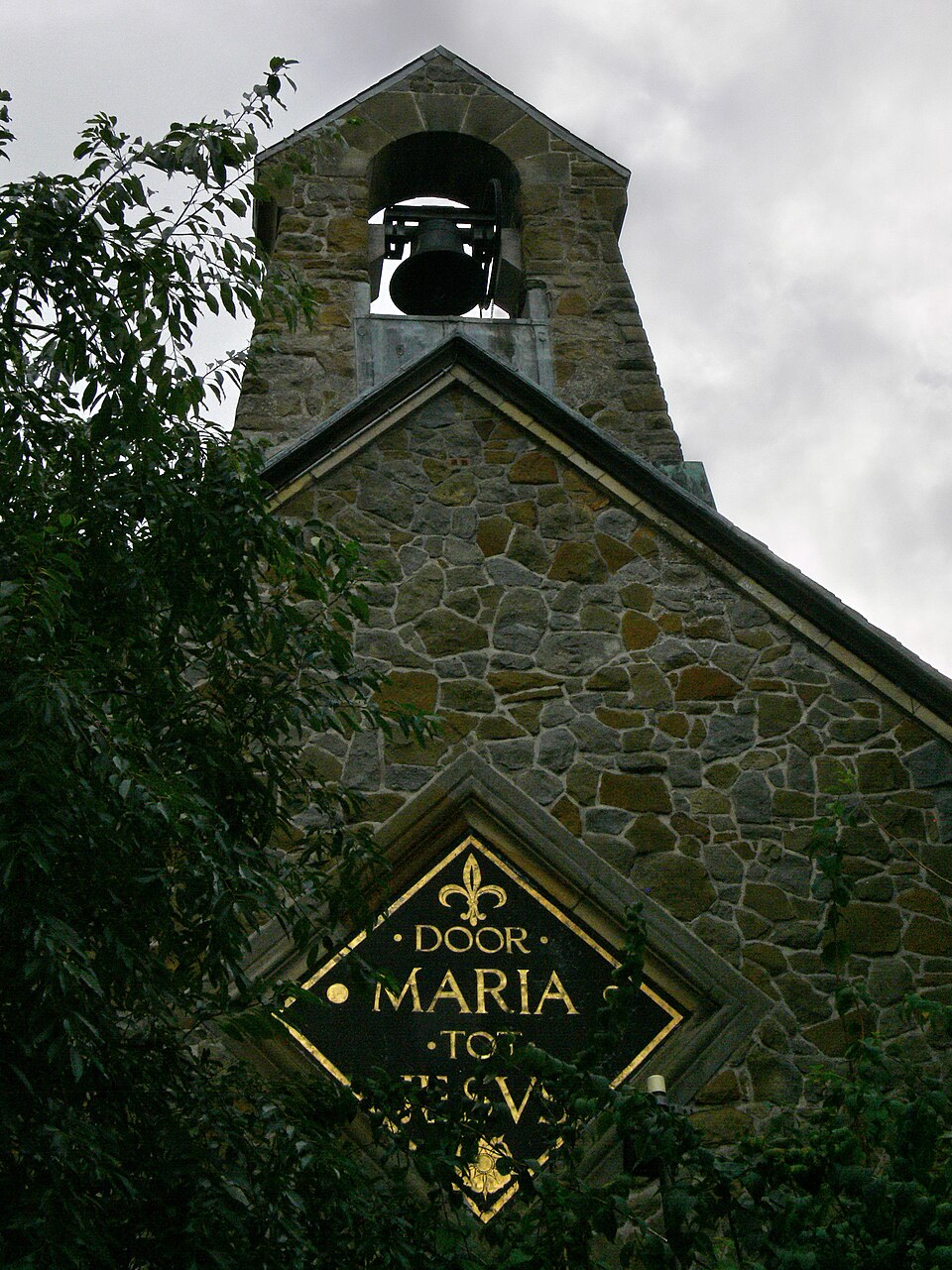
The present Chapel of Grace dates from 1930 and stands on or near the site of the medieval Marian chapel. The Runxput lies in its forecourt. Around it are the park and walking paths. From this small centre, a place grew once again where people could walk, pray and pause.
The grounds were then gradually expanded with paths, stations and space for larger groups. The result was not a complex designed all at once, but a shrine that continued to develop as its use changed over time.
What this place tells today
Onze Lieve Vrouw ter Nood remains a living religious place. People pray and celebrate here. Some come for a service or confession. Others come alone, light a candle or remain for a while beside the well. The grounds therefore differ from a museum or an abandoned chapel site. Devotion is not merely a thing of the past; it is still practised here today.
The old stories remain present. The discovery of an image of Mary, the sailor in distress and the water that began to flow again belong to stories passed down here for generations. They do not establish with certainty what happened historically, but they do show what people hoped to find here: protection, healing and comfort in times of need.
At the Runxput, the whole story ultimately comes together in something small and tangible. Yet this is where the heart of the shrine lies. The well connects the medieval pilgrimage with the twentieth-century revival and with the people who still come to Heiloo today.
Do not stop at the chapel façade. Walk to the well and then look out across the rest of the grounds. Follow part of the paths or the Stations of the Cross. It is through this movement that you understand why people have come here for centuries in search of help, peace or comfort.