
The story of this place
A church for the whole city
As soon as you step into Grote Kerk Alkmaar, the space is the first thing you notice. The high wooden vault, pale stone pillars and silence make the bustle of Alkmaar’s city centre seem to fade almost at once. Only then do you notice how many different periods of its history have remained visible beside one another.
The church is also known as the Grote Sint-Laurenskerk. Its name refers to its original dedication to Saint Lawrence. Before the building acquired a Protestant and later cultural function, it was Alkmaar’s principal Catholic church. Masses were celebrated here, prayers were spoken and religious feast days were observed.
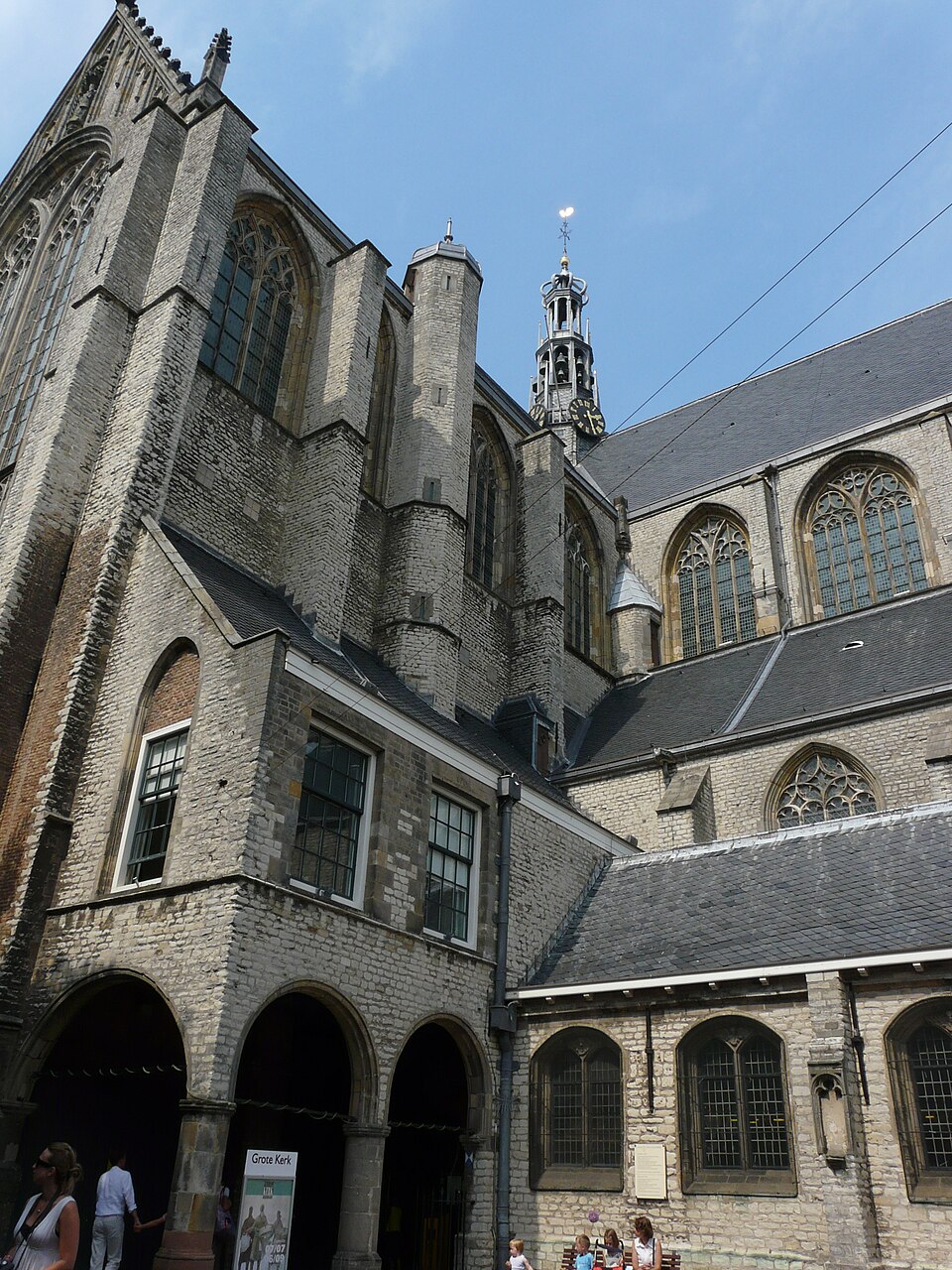
Construction of the present church began in 1470. For Alkmaar, it was a large and costly undertaking. The city wanted a church that reflected its growth and increasing prosperity. High windows, buttresses and pale natural stone gave the building its late Gothic character. Its scale shows that this space was intended not for a small community, but for an entire city.
A city church served many purposes beyond worship. Alkmaar’s residents came here for baptism, marriage and burial. Families donated money, commissioned grave slabs and attached their names to chapels or church furnishings. In this way, the church also became a place where Alkmaar continued to remember its residents and families.
Names beneath your feet
Part of that memory lies beneath your feet. The floor contains the grave slabs of generations of residents. In medieval and early modern churches, death was part of everyday life. The dead were not placed at a distance, but given a place in the very space where the city gathered. The floor is therefore more than a practical surface. It preserves names, family histories and traces of wealth and standing.
Judgement above the choir
Above the choir is one of the church’s most remarkable features: the painting of the Last Judgement on the wooden vault. The work is associated with Jacob Cornelisz. van Oostsanen. For the original congregation, it was not simply decoration. The image reminded them of death, judgement and salvation. It hung literally above their daily lives.
The church almost naturally draws your gaze in two directions. Above is the painted vault. Below are the grave slabs. For centuries, the people of Alkmaar moved between those two layers. Here they prayed, listened and took leave of their dead.
A church that resounds
Music also shaped the meaning of the space. The Grote Kerk Alkmaar contains two famous organs. The Van Covelens organ from 1511 is regarded as the oldest still playable church organ in the Netherlands. On the west side stands the internationally renowned Van Hagerbeer/Schnitger organ. When the organs sound, their music spreads beneath the wooden vault. Even in silence, their size and the height of the nave show how important music was here for centuries.
What this place tells today
After the Reformation, the use of the church changed. Altars and Catholic rituals gave way to the Protestant emphasis on preaching, Scripture reading and psalm singing. The building remained, but the way people used the space and experienced the sacred changed profoundly.
Its Catholic origins remained visible in the church’s name, its form and the painting above the choir. At the same time, its furnishings and the history of its use tell of centuries of Protestant worship.
Today the church hosts exhibitions, concerts and events. Yet the space does not feel like an ordinary hall. Many visitors lower their voices almost automatically when they enter. They look up, pause by the organs or read the names in the floor. The scale and silence slow the pace set outside by shopping streets and terraces.
The Grote Kerk Alkmaar is therefore more than a large old building. It preserves different layers of Alkmaar in one place. The Catholic city church, the Protestant past, the floor with its grave slabs and the organ tradition remain clearly distinguishable as separate layers.
Step inside when the church is open. First look at the wooden vault and find the depiction of the Last Judgement. Then direct your attention to the floor and its grave slabs. Finally, pause by the two organs. Perhaps that is the most remarkable thing about this church: not only that it has stood for more than five centuries, but also that every generation has given it new meaning without entirely erasing what came before.