
The story of this place
A church site that shaped the village
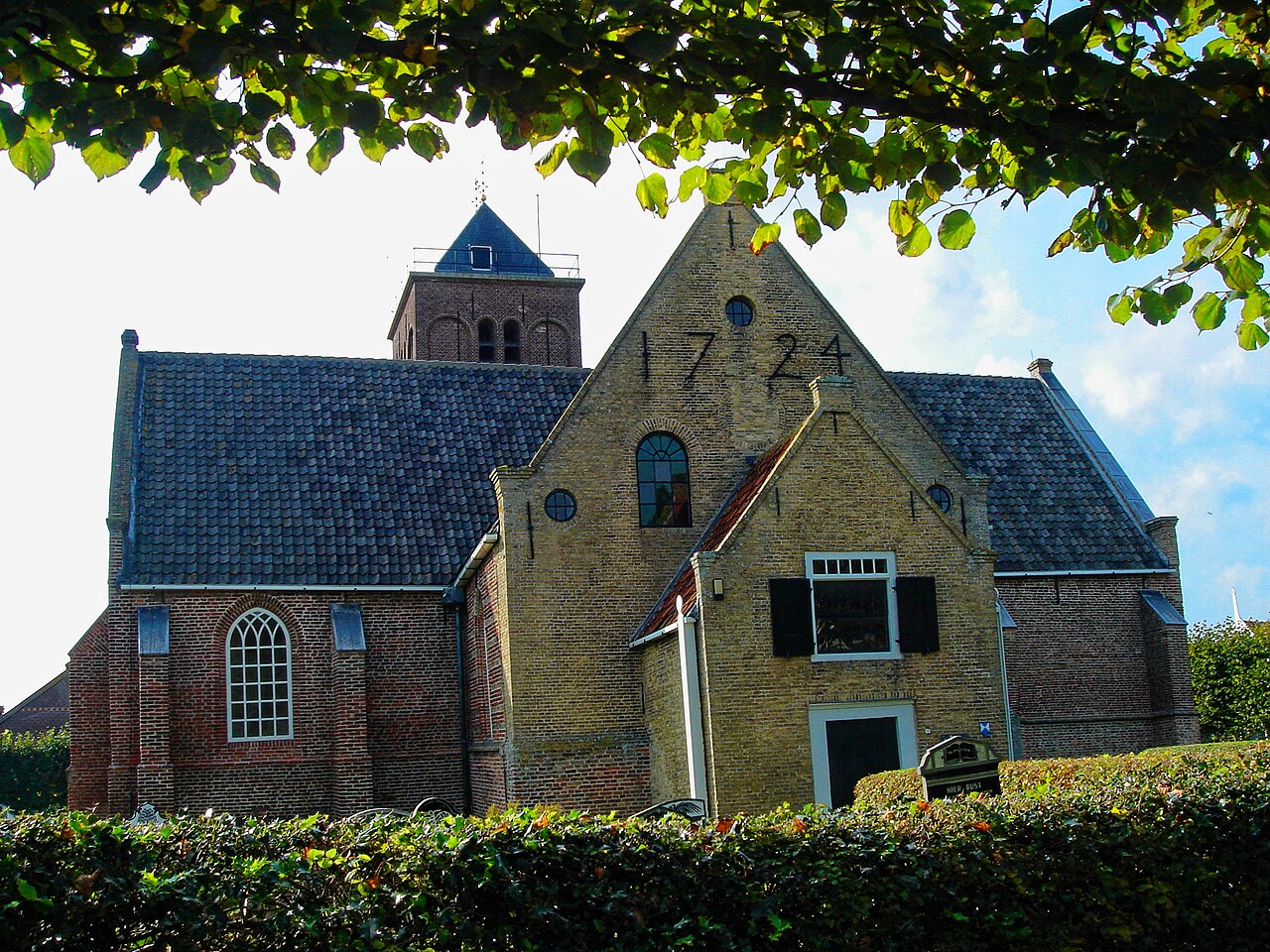
The Maartenskerk stands on a slight rise in the heart of Oosterend. Narrow streets lead towards the churchyard and low houses gather around it. Its position makes clear that the village developed around this site.
A tuff-stone church was built here around 1200. Parts of that early phase can still be recognised in the north wall. The stone did not come from Texel, but was brought across the water. Oosterend was therefore connected to craftsmen and ecclesiastical networks beyond the island.
The church was dedicated to Saint Martin. That old name survived even after the Catholic furnishings disappeared. The building thus preserves both architectural history and the memory of different forms of worship.
A building that grew with Oosterend
The Maartenskerk acquired its present form step by step. The nave was extended, a choir was added in the fifteenth century and transepts followed in the sixteenth century. This created the cruciform ground plan. The tower was later raised, and the year 1724 on the east side marks a later rebuilding phase.
Tuff, brick and different building forms therefore sit side by side. The church is not a remnant of a single period, but a building adapted by successive generations.
The Reformation changed the faith, not the place
After the Reformation, Catholic altars and images disappeared and worship took on a Protestant character. A local tradition survives about the removal of the former statue of Saint Martin, although the precise course of events is uncertain.
The church site itself remained in use. Villagers continued to gather here and buried their dead around the same building. This is why the Maartenskerk belongs within the theme of Sacred Places: not because of a single miracle, but because the same ground was used for faith, farewell and remembrance over many centuries.
Human traces in wood and stone
House marks, signs and dates are carved into a wooden screen. They are small traces of villagers who once sat or waited here. They make the everyday use of the church more tangible.
Restoration work also revealed a stone sarcophagus. The baptismal font, brass chandelier and organ point to other moments in church life: baptism, services, mourning and feast days. The history lies not only in the walls and woodwork, but also in the ground beneath your feet.
Outside, the tower forms a recognisable landmark in the low landscape. Even from a distance, the church shaped the image of Oosterend.
What you can still read today
The church was thoroughly restored between 1968 and 1971. This made the old tuff-stone sections more clearly visible again. The Maartenskerk is still used for services, music and gatherings. Access to the interior is limited, but when it is open the building phases and old traces of use can be seen clearly.
First walk around the raised churchyard. Notice where tuff gives way to brick and how the streets lead towards the church. Inside, look for the house marks and pause by the sarcophagus and font. You can then see how Oosterend, its faith and the building changed while this place remained the religious heart of the village.