Stil eropuit
Nederland Onder Je Voeten
Back to map

Theme

Remarkable nature reserves in North Holland

Remarkable nature results from soil, water, wind, salt, management and time. North Holland contains exceptionally varied habitats within short distances, from wet dune valleys and tidal flats to peat lakes and urban-edge wilderness. Each place has its own species and best season. This theme page helps you choose nature reserves in North Holland by landscape, species and time of year. Monthly guidance on the detail pages provides direction, but wildlife remains dependent on weather, water levels and chance.

12 places

Landscapes of sharp transitions

North Holland’s richness often lies in transitions. Dry dune borders wet valley, fresh water meets brackish habitat and open grassland touches reeds or scrub. Along such edges, many plants, birds and insects find food, shelter and breeding space.

A small area can therefore support a remarkable number of species. Those who look only at the centre of a landscape often miss the most valuable edges. Notice transitions in height, moisture, vegetation and soil.

Management is part of the story

Many areas would change rapidly without management. Mowing, grazing, removing topsoil, water-level control and seasonal closures preserve vulnerable conditions. This does not make nature less real; it shows how rare species depend on careful intervention in long-influenced landscapes.

Grazing animals, mown plots, weirs and temporary fences are therefore not interruptions to the story, but part of it. They show how management preserves the conditions on which vulnerable species depend.

Places to discover

Dune landscape with water, sand and vegetation in the Amsterdam Water Supply Dunes

Photo: Willem Reinier de Jong

Credit: Photo: Willem Reinier de Jong / Nederland Onder Je Voeten

Licence: All rights reserved

Changes: No changes.

Special nature

Amsterdam Water Supply Dunes

Zandvoort, Bloemendaal and Noordwijk

Between Zandvoort and Noordwijk lie the Amsterdam Water Supply Dunes: an extensive dune landscape of open sand, flower-rich grasslands, wet valleys, scrub, woodland and long water channels. Water for Amsterdam…

View this place
View from the Amstelmeer area across Balgzand and the Wadden Sea

Photo: Michielverbeek

Credit: Photo: Michielverbeek, via Wikimedia Commons, CC BY-SA 3.0

Licence: CC BY-SA 3.0

Changes: No changes.

Source ↗

Special nature

Balgzand

Den Helder and Hollands Kroon

Between Den Helder and the former island of Wieringen lies Balgzand, an extensive landscape of tidal flats, channels, salt marshes and saline grasslands. At low tide, thousands of birds spread across the expos…

View this place
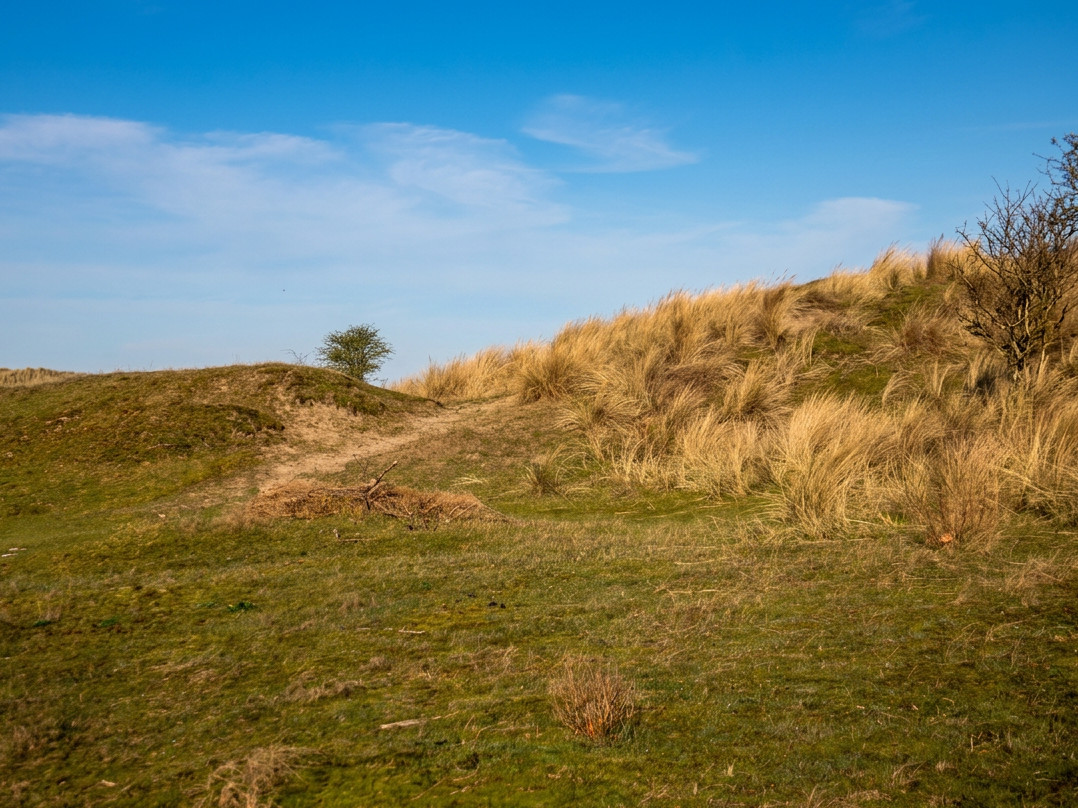
Extensive dune landscape of De Muy on Texel with a low valley, grassland and high dune ridges

Photo: Txllxt TxllxT

Credit: Photo: Txllxt TxllxT, via Wikimedia Commons, CC BY-SA 4.0

Licence: CC BY-SA 4.0

Changes: No changes.

Source ↗

Special nature

De Muy

Texel

Between De Koog and De Slufter lies De Muy: a young dune landscape with steep slopes, an elongated wet valley, grasslands, the Muy lake and the dark pine copse known as Oorlogsschip. Unlike De Slufter, the inf…

View this place
View from the Hoeckelingsdam across the IJmeer, with De Vijfhoek and the power station in the distance

Photo: Milliped

Credit: Photo: Milliped, via Wikimedia Commons, CC BY-SA 4.0

Licence: CC BY-SA 4.0

Changes: No changes.

Source ↗

Special nature

De Vijfhoek

Diemen

On the eastern edge of Amsterdam lies De Vijfhoek, also known as the Diemer Vijfhoek or PEN Island. The nature area developed around 1970 on dredged and reclaimed material in the IJmeer. Within a few decades…

View this place
Open peat-meadow landscape with ditches and grasslands in the Eilandspolder near Noordeinde

Photo: Dqfn13

Credit: Photo: Dqfn13, via Wikimedia Commons, CC BY-SA 4.0

Licence: CC BY-SA 4.0

Changes: No changes.

Source ↗

Special nature

Eilandspolder

Alkmaar

Between De Rijp, Schermerhorn, Grootschermer and Noordeinde lies the Eilandspolder: a centuries-old low-peat landscape of narrow grasslands, ditches, reed fringes and small lakes. The old peat island lies high…

View this place
Open peat-meadow landscape with water and reeds in the Ilperveld.

Photo: Maarten Sepp

Credit: Photo: Maarten Sepp, via Wikimedia Commons, CC BY-SA 3.0

Licence: CC BY-SA 3.0

Changes: No changes.

Source ↗

Special nature

Ilperveld

Landsmeer

Between Landsmeer, Den Ilp, Ilpendam and the North Holland Canal lies the Ilperveld: a watery low-peat landscape with long ditches, reed beds, wet meadows, quaking bogs and hundreds of narrow peat islands. Clo…

View this place
Open water, reeds and marsh landscape in the Naardermeer

Photo: Rijkswaterstaat

Credit: Source: Rijkswaterstaat Image Bank, Rijkswaterstaat, via Wikimedia Commons. Attribution to Rijkswaterstaat is mandatory.

Licence: Attribution only – Rijkswaterstaat

Changes: No changes.

Source ↗

Special nature

Naardermeer

Gooise Meren

Between Amsterdam, Hilversum, Weesp and Naarden lies the Naardermeer: a natural lake with clear water, extensive reed beds, swamp woodland and waterlogged grasslands. The area faced repeated attempts at draina…

View this place
Open sand, heath and dune landscape in the Schoorl Dunes

Photo: FrDr

Credit: Photo: FrDr, via Wikimedia Commons, CC BY-SA 4.0

Licence: CC BY-SA 4.0

Changes: No changes.

Source ↗

Special nature

Schoorl Dunes

Bergen

Near Schoorl lies one of the widest and highest dune areas in the Netherlands. The Schoorl Dunes contain open sand, steep dune ridges, heath, pine woodland and wet dune valleys. The transitions between these l…

View this place
Rough vegetation and open space in the Lange Bretten in Amsterdam-West

Photo: Marion Golsteijn

Credit: Photo: Marion Golsteijn, via Wikimedia Commons, CC BY-SA 4.0

Licence: CC BY-SA 4.0

Changes: No changes.

Source ↗

Special nature

The Lange Bretten

Amsterdam

Between Sloterdijk and Halfweg lies the Lange Bretten, an elongated urban wilderness of reeds, scrub, water, muddy paths and open grassland. Railway lines, harbour edges and residential districts remain close…

View this place
De Slufter on Texel with dunes, a sandy plain, salt-marsh vegetation and a walking path

Photo: Rasbak

Credit: Photo: Rasbak, via Wikimedia Commons, CC BY-SA 3.0

Licence: CC BY-SA 3.0

Changes: No changes.

Source ↗

Special nature

The Texel Slufter

Texel

On the north-western side of Texel lies De Slufter, a rare salt marsh connected directly to the North Sea by a channel and a branching network of tidal creeks. At high water, seawater penetrates deep between t…

View this place
Narrow grassland plots and waterways in the Wormer and Jisperveld

Photo: Wolk

Credit: Photo: Wolk, via Wikimedia Commons, public domain

Licence: Public domain

Changes: No changes.

Source ↗

Special nature

Wormer and Jisperveld

Wormerland

Between Wormer, Jisp, Neck and Oostknollendam lies the Wormer and Jisperveld: an extensive lowland peat landscape where waterways replace roads. Thousands of narrow grassland plots lie like green islands among…

View this place
A large dune lake with reed-fringed banks and dunes in Zwanenwater nature reserve near Callantsoog

Photo: MatsAlkmaar

Credit: Photo: MatsAlkmaar, via Wikimedia Commons, CC BY-SA 4.0

Licence: CC BY-SA 4.0

Changes: No changes.

Source ↗

Special nature

Zwanenwater near Callantsoog

Schagen

Behind the dunes south of Callantsoog lies Zwanenwater, an almost intact landscape with two large natural dune lakes, broad reed and marsh zones, wet valleys, heath and open sand. Spoonbills, cormorants and ma…

View this place

From dunes and tidal flats to peatland and urban edge

North Holland’s nature reserves differ greatly. Texel and the coast offer dunes, salt marshes and tidal flats. Inland lie peat lakes, reedbeds and meadow-bird areas. Around cities, different forms of nature emerge, often on former industrial or infrastructure sites.

Each landscape requires a different way of looking. Along the coast, wind, salt and tide dominate. In peatlands, water level and management are decisive. Urban-edge nature often depends on spontaneous development, quiet and connections between fragmented areas.

Choose your moment and look slowly

The same place can be completely different each month. Spring birdsong, flowering orchids, breeding colonies, migrating birds and winter raptors each follow their own calendar. Use monthly guidance on the detail pages, but expect no guarantee.

Visit early or late in the day if you want quiet and wildlife. Stay on paths, keep your distance and respect temporary closures. Nature remains dependent on weather, water levels and chance. That unpredictability is precisely what makes every visit different.

Concrete examples include De Muy and De Slufter on Texel, Balgzand, Naardermeer, the Amsterdam Water Supply Dunes and Wormer- en Jisperveld. They range from dune valleys and tidal flats to peatland, reedbeds and meadow-bird habitats.

Explore further: