
The story of this place
Urban wilderness on old polder ground
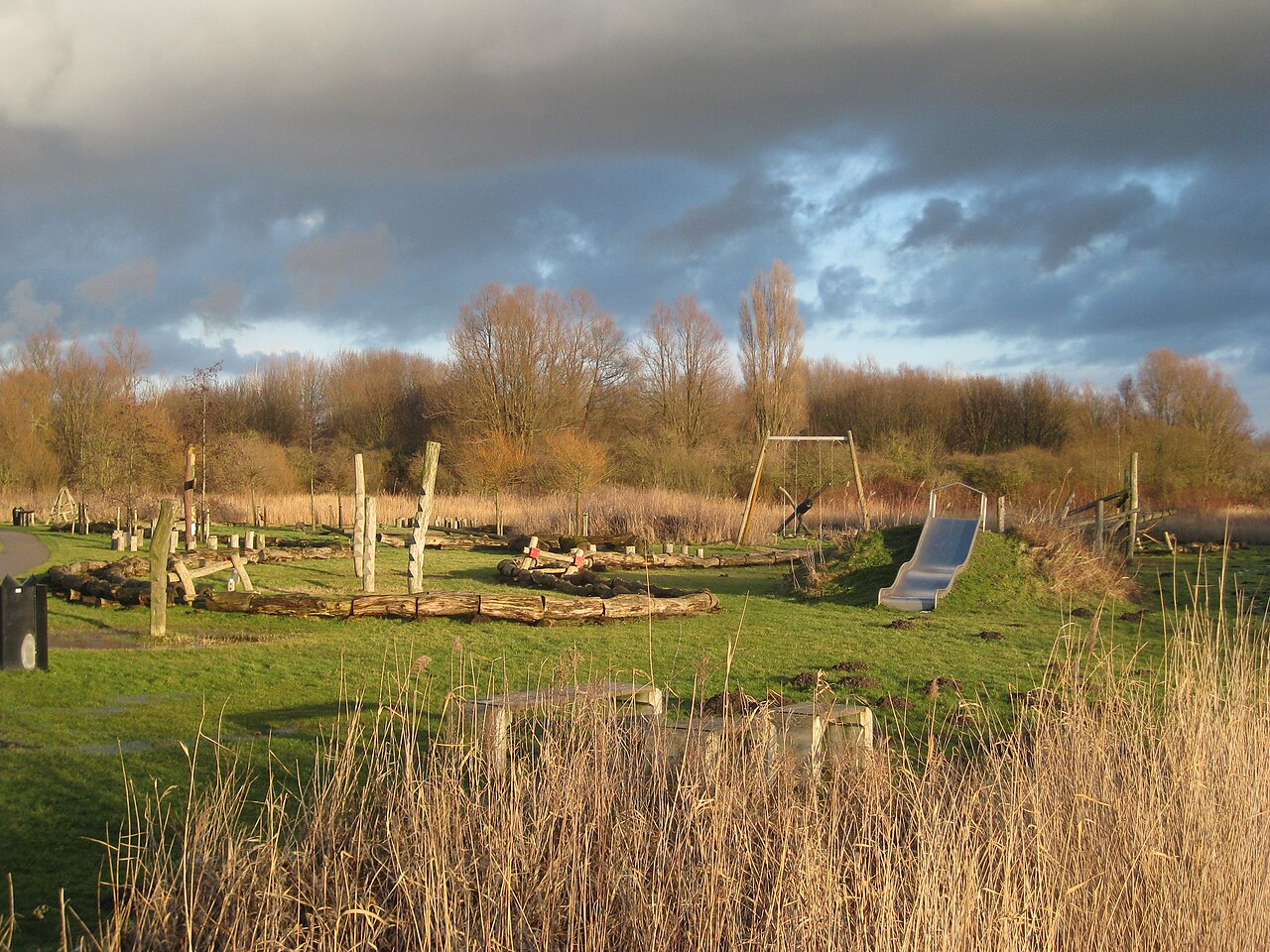
The Lange Bretten extends as a green strip between Sloterdijk and Halfweg. Railway lines, roads, business parks, harbour zones and residential districts lie on either side. Yet the landscape changes as soon as the path leaves the buildings behind. Reeds close off the view, ditches glimmer between the vegetation and the ground becomes softer. On wet days, mud clings to your shoes. Trains remain audible, but their sound belongs to a different world from the rustling reeds and the calls of waterbirds.
Beneath this modern urban nature lies an older landscape. For centuries, the western side of Amsterdam consisted of low peat and polder land with ditches, wet grassland and soft soils. Urban expansion, railways and harbour development fragmented that open country from the nineteenth century onwards, especially during the twentieth. Not everything disappeared. Wet hollows, waterways and parts of the old field pattern survived in the Lange Bretten. They form the foundation on which the area’s present-day habitats developed.
Where habitats meet
The area is therefore not a remnant preserved unchanged from the past. It is young nature on old ground. Reed beds, flower-rich rough grassland, meadows, woodland patches and scrub lie close together. The many boundaries between wet and dry, open and enclosed, sunny and sheltered create a wide range of habitats. In spring, bluethroats sing from the reeds. Sedge warblers often remain hidden among the stems, while a marsh harrier may quarter low above open ground. Along quiet water, a sudden blue flash may reveal a kingfisher.
The variation also matters beyond the birdlife. Dragonflies hunt above ditches and sunny banks. Bees, hoverflies and butterflies feed in flowering areas. In the evening, bats follow waterways and woodland edges where insects gather. Pine martens are rarely seen, but dense cover and green links give them shelter and routes through the area. Foxes use the same quiet margins. Such animals are not constantly on display; their presence is more often suggested by a brief sighting, a track in the mud or a sudden movement in the scrub.
Wild, but not unmanaged
The wild appearance does not maintain itself. Without management, open grassland and wet tall vegetation would gradually close over. Grazing animals help preserve differences in height and density. Their feeding, resting places and tracks create room for low plants beside taller grass and shrubs. Water management keeps ditches and wet areas functioning, while other sections are deliberately left undisturbed. The landscape is actively managed without being manicured. Management protects its variety without turning it into a conventional city park.
Its elongated shape adds to its importance. The Bretten forms a green connection between Amsterdam and the countryside around Halfweg and Spaarnwoude. Animals can move through the urban fringe along water, reeds, grassland and woodland patches. For species that need cover and quiet stepping stones, such a corridor is more valuable than an isolated green space. The area's ecological importance therefore depends not only on what breeds or grows here, but also on its role within a wider network.
Between city and countryside
No ticket, museum visit or guide is needed for a walk. Public paths cross different parts of the area, and cycling is possible on the broader routes. After rain, the ground may be waterlogged, and not every path is suitable for people with limited mobility. A slower pace reveals more: song from the reeds, dragonflies above a ditch, tracks left by grazers or a raptor turning low over a field. Infrastructure remains conspicuous in places. Rather than simply spoiling the scene, it shows how much nature can survive within a busy urban edge.
That position also makes the Lange Bretten vulnerable. Urban nature without a formal appearance is easily mistaken for unused land. At the same time, recreational pressure is increasing as more people live and work nearby. Between 2025 and 2030, work is therefore being carried out to balance ecological value and access more effectively. The challenge is clear: to welcome walkers and cyclists without losing quiet zones, wet soils and green connections. This is what gives the Lange Bretten its meaning. It is not untouched wilderness beyond the city, but a living landscape that has retained enough space between railway, harbour and housing to remain wild.
What can you see when?
The months below show when a sighting is most likely. Wildlife remains unpredictable.

Bluethroat
Look for bluethroats in reeds, wet rough vegetation and low scrub, where males may sing conspicuously from a stem or shrub top in spring.

Western marsh harrier
Watch above reed beds, wet hollows and open ground for the slow, low hunting flight of a marsh harrier.

Kingfisher
All yearAlong ditches, banks and quiet stretches of water, a sudden blue flash may skim low across the surface.

Sedge warbler
In spring and summer, listen and look in reeds and dense bankside vegetation; sedge warblers are often heard before they are seen.

Pine marten
All yearPine martens are rarely seen. They are most closely associated here with dense woodland patches, rough edges and quiet areas where they can hunt and move unseen.

Bats
On mild evenings, bats may hunt along waterways, woodland edges and open spaces where insects gather.

Dragonflies
Dragonflies are most noticeable above ditches, wet hollows and sunny banks, where water and rough vegetation meet.

Butterflies of rough vegetation and flower-rich edges
Warm, flower-rich spots beside paths, open patches and rough edges are the best places to look for butterflies.
Bees and other pollinators
Flower-rich rough vegetation and sunny edges provide important feeding habitat for bees, hoverflies and other pollinators in spring and summer.
Common reed
All yearReeds define the wet character of the Lange Bretten and provide cover, song posts and breeding habitat for many marsh and reed-bed birds.

Highland cattle
All yearThe grazing cattle help keep parts of the area open, while their feeding and tracks make the management of this urban wilderness visible on the ground.

Red fox
All yearFoxes move easily through quiet margins and dense cover, although seeing one is usually a matter of luck.