
The story of this place
A lake that resisted drainage
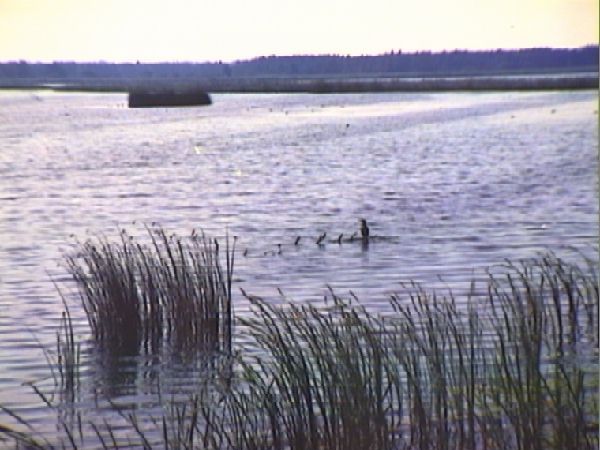
The Naardermeer lies at the transition from the higher sandy soils of the Gooi to the low peat and polder country around the Vecht. From the surrounding roads, it sometimes appears as a broad green basin. Reed beds conceal the water, wet meadows glisten behind low embankments and birds rise above the marsh. The area feels secluded, although railway lines, motorways and towns are never far away.
Unlike many lakes in the western Netherlands, the Naardermeer was not created by peat extraction. It is a natural lake whose history is connected with flooding, peat formation and its former links with the Vecht and the Zuiderzee. Water could penetrate far into the low-lying land. That connection was closed at the end of the fourteenth century, but the lake remained a wet core that proved difficult to control.
Several attempts were made to drain the Naardermeer. A lake was regarded as unused space, while a polder could provide farmland. Windmills and later other technology were used to remove the water. The soil subsided, however, the water returned and the operation proved expensive and vulnerable. What seemed a logical reclamation project on a map did not work so easily in the landscape. The Naardermeer endured.
A marsh in constant transition
Those failed drainage schemes helped shape today’s mosaic. Open lakes merge into shallow water, extensive reed beds, waterlogged hay meadows and wet woodland. In areas of natural infilling, open water gradually becomes covered by vegetation. Water soldier and water lilies float in sheltered sections, while alders and willows establish themselves in the wet woodland. Some parts of the forest are barely entered and develop without a conventional path network.
The range of habitats attracts remarkable birdlife. The purple heron is closely associated with the Naardermeer. It flies from the reeds to shallow water and wet grassland to feed. Cormorants rest in trees or on posts, spoonbills sweep their flattened bills through shallow margins and the bittern usually remains concealed. Its low booming call may carry far across the reeds in spring. Sedge warblers and Savi’s warblers are more often heard than seen.
There is also abundant life in and beside the water. Dragonflies hunt above ditches and sheltered banks. Fish use vegetation-rich waterways, and bats follow woodland edges in the evening. The return of the otter shows the importance of clean water and safe links with other marshlands. A sighting remains rare, but tracks along the banks may reveal its presence.
From rubbish dump to nature conservation
Around 1900, the area faced a more drastic threat than the earlier drainage attempts. Amsterdam needed space for urban waste, and the Naardermeer was considered as a possible dumping site. The lake and marshes would have disappeared beneath rubbish and infill. At that time, nature had little independent legal protection. Land was expected to be economically useful or could be replaced by a new function.
Jac. P. Thijsse and other nature advocates resisted the plan. Their campaign demonstrated that monuments did not have to be buildings, paintings or historic objects. A lake, reed bed and breeding colony could also represent something irreplaceable. The Vereniging tot Behoud van Natuurmonumenten was founded in 1905. Soon afterwards, the society purchased the Naardermeer. It became the organisation’s first major nature reserve and an example for later conservation elsewhere in the Netherlands.
The purchase did not mean that the lake would remain safe or healthy without further effort. Water quality, drying, nitrogen deposition, disturbance and ecological isolation continue to affect the marsh. The landscape surrounding the core is therefore crucial. Wet grasslands and new marsh zones in the Naardermeer buffer retain water, provide feeding and breeding habitat and connect the lake more effectively with the wider landscape. Management involves intervening where necessary and preserving quiet where natural processes require space.
On foot and from the water
Only part of the Naardermeer can be understood from the public paths. The Laarzenpad and other walking routes pass wet meadows, boardwalks, ditches and observation points. The long route around the reserve takes a substantial part of the day and can be extremely muddy after rain. Walking is free and requires no guide. Dogs are not permitted on several nature trails, and visitors must remain on the marked routes.
The perspective changes from an electric boat. With a guide, the route passes along narrower waterways, beside reed beds and across water hidden from the surrounding roads. Boat trips are paid, have limited capacity and must be reserved in advance. They are not required for a visit, but they reveal sections of the landscape that can barely be seen from the shore.
Each way of visiting therefore tells a different part of the same story. Walkers see the lake as a wet core behind reeds, grassland and embankments. Cyclists experience the scale of the surrounding polders. From the boat, the relationship between water, natural infilling and wet woodland becomes clear. Together, these perspectives reveal a landscape shaped not only by natural processes but also by failed reclamation, threatened destruction and more than a century of active conservation.
The Naardermeer survived because people decided at a crucial moment that a marsh was not empty space. Between the reeds and open water lies more than a species-rich nature reserve. This is where the idea took shape that a landscape can possess value without first being converted into farmland, building land or a dumping ground.
What can you see when?
The months below show when a sighting is most likely. Wildlife remains unpredictable.
Purple heron
A classic Naardermeer species, most likely to be seen flying above reed beds, shallow water and quiet marsh margins.
Great cormorant
All yearOften visible on open water, in trees or on posts; cormorants have long been a familiar part of the Naardermeer’s birdlife.

Sedge warbler
In spring and summer, listen for sedge warblers in reed margins and dense bankside vegetation; they are often heard before they are seen.
Savi’s warbler
A secretive reed-bed bird, usually betrayed by its long, reeling song from dense marsh vegetation.
Eurasian bittern
Bitterns are rarely seen well, but in suitable reed beds their deep booming call can carry a long way across the marsh in spring.
Great egret
A conspicuous white presence beside shallow water, wet grassland and quiet banks, especially outside the breeding season.
Eurasian spoonbill
Look for spoonbills in shallow water and wet margins, sweeping their distinctive spoon-shaped bills from side to side as they feed.
Kingfisher
All yearAlong ditches, banks and sheltered waterways, a sudden blue flash may skim low across the water.
Eurasian otter
All yearOtters are rarely seen, but clean water, vegetated banks and quiet connections around the Naardermeer provide suitable habitat. Tracks may be easier to find than the animal itself.
Bats
On mild evenings, bats may hunt along waterways, woodland edges and sheltered spots where insects gather.
Water soldier
Water soldier is characteristic of clear, vegetation-rich lowland peat waters and forms sturdy rosettes at the surface in summer.

White water lily
In summer, water lilies give quiet stretches of water their familiar pattern of floating leaves and white flowers.
Dragonflies
Dragonflies are most noticeable above ditches, banks, open water and sunny reed edges where warmth and shelter come together.