
The story of this place
Dunes shaped by sand, wind and water
Between Zandvoort and Noordwijk lies a dune landscape that is both a nature reserve and part of Amsterdam’s drinking-water supply. Beyond the outer dune ridge, open sand, dry grasslands, wet valleys, scrub and old woodland succeed one another. Straight water channels cut through the natural relief. They reveal that the landscape is shaped not only by sea, wind and vegetation, but also by a technical system working for the city every day.
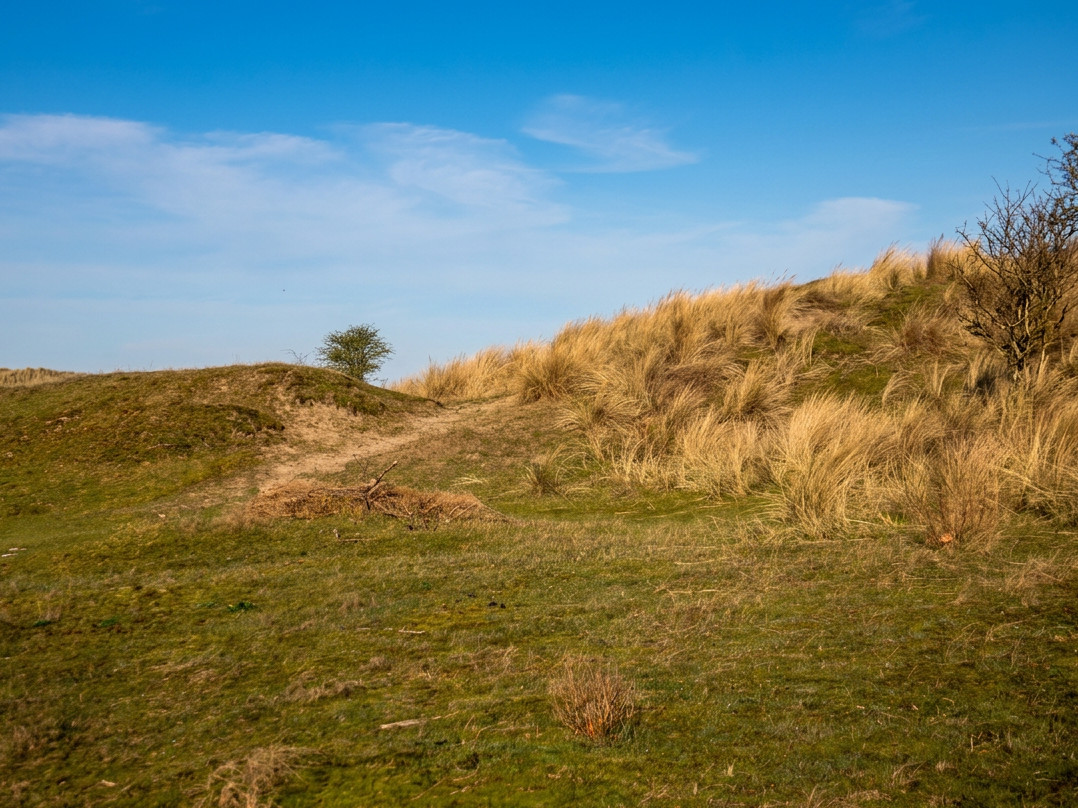
The dunes developed from sand carried to the coast by the sea and blown inland by the wind. Close to the shore, white dunes remain mobile. Marram grass traps drifting sand and grows upwards as new layers accumulate. Farther inland are grey dunes with low herbs, mosses and lichens. In spring and summer, dune pansies, burnet roses, thyme and other plants colour the nutrient-poor grasslands. Valleys between higher ridges bring rainwater and groundwater close to the surface. Some flood in winter and partly dry later in the year.
These transitions make the area rich in species. Woodlarks sing above open sand and low vegetation. Nightingales remain hidden in sea-buckthorn, hawthorn and bramble. Sand lizards bask along sunny edges, while natterjack toads use shallow temporary pools. Butterflies, bees and dragonflies benefit from flower-rich grasslands and wet valleys. Woodland sections support woodpeckers, bats and many insects associated with old and dead wood.
Drinking water among the dunes
A water system has crossed this landscape since the nineteenth century. Amsterdam was then struggling with polluted drinking water from canals, pumps and shallow wells. In 1853, dune water reached the city through a pipeline for the first time. The natural supply later proved insufficient. Today, pre-treated river water from the Lekkanaal is brought into the area and distributed through forty infiltration channels with a combined length of about twenty-five kilometres.
The water filters through the sand and is naturally purified further. Soil bacteria break down some contaminants, and the infiltrated water mixes with naturally occurring dune water. After roughly two to three months, much of it reappears in lower collection and storage canals. The remainder is recovered through drains. All the water eventually reaches De Oranjekom and is pumped to the treatment works at Leiduin. Further treatment there turns it into drinking water for Amsterdam and surrounding municipalities.
Water extraction altered the dunes but also helped protect them. Because the area was vital to the drinking-water supply, large-scale housing, roads and intensive recreation were largely kept outside. At the same time, water levels, channels and natural flows were greatly modified. Management therefore requires constant choices: producing clean drinking water, protecting vulnerable habitats and giving visitors space without opening every part of the reserve.
Nature under active management
Fallow deer are the most conspicuous animals. They are often seen beside paths and on open grassland, but their large numbers had a heavy impact on herbs, shrubs and young trees for many years. Flower-rich dune grasslands lost species locally, and insects lost nectar plants. The population is therefore managed, and vulnerable sites are sometimes protected by fencing. Rabbits play a more beneficial role by digging and grazing closely, maintaining patches of bare sand and open grey dunes.
Nitrogen deposition and the gradual closing of open dunes also demand attention. Mowing, turf removal, targeted grazing and the reopening of drifting-sand areas restore nutrient-poor conditions and sand movement locally. Such work may look bare at first, but it is intended to create room again for low herbs, mosses, lichens and insects. Management does not try to fix one ideal image; it aims to retain variation between sand, grassland, valley, scrub and woodland.
Exploring a working landscape
Visitors aged eighteen and over need an admission ticket. Those arriving by car pay separately to park at the official car parks. The reserve is open daily between sunrise and sunset. Bicycles and dogs are not permitted, apart from recognised assistance dogs and approved mobility aids for visitors with physical disabilities. Away from closed quiet and infiltration zones, walkers may leave the paths in many places. A route can therefore cross a sandy slope, pass through a valley or follow a barely visible trail.
The four main entrances reveal different aspects of the area. At Oase and De Oranjekom, the waterworks and visitor centre are most apparent. Panneland opens towards woodland, old fields and open dunes. Higher dunes, woodland edges and bunkers lie close to the Zandvoortselaan entrance. Sturdy footwear is sensible, and carrying enough drinking water is important in warm weather. The landscape is extensive and distances are easily underestimated.
Every sandy path carries the same double history. Sea and wind built the dunes. Amsterdam added pipelines, channels and canals. Plants and animals occupied the new banks, wet areas and open spaces. Water flowing among the dunes slowly disappears into the ground and returns to the city after further treatment. The area is therefore neither scenery surrounding a water factory nor a nature reserve free from human influence. It is a working landscape in which sand is simultaneously soil, habitat and filter.
What can you see when?
The months below show when a sighting is most likely. Wildlife remains unpredictable.

Woodlark
From late winter, its melodious song can be heard above open dunes, drifting sand and low vegetation. The bird often sings during a circling display flight.

Common nightingale
From April, its powerful varied song comes from dense sea-buckthorn, hawthorn and bramble scrub. The bird itself usually remains hidden.

Dune pansy
Its yellow, purple and white flowers grow on open sunny sand. The plant is also an important larval food plant for the Queen of Spain fritillary.

Burnet rose
Low white roses flower in open dune grassland in late spring, followed by dark hips. Some sites are protected against heavy grazing by fallow deer.

Sand lizard
Sand lizards may bask along sunny edges between bare sand and low vegetation. Males often develop striking green flanks in spring.

Natterjack toad
On mild evenings, a prolonged rolling call may come from shallow pools. The species mainly uses young open water bodies that warm quickly.

Queen of Spain fritillary
This orange butterfly flies over warm open dunes and often rests on sandy tracks. Striking silver spots occur beneath the hindwings.
Grass-of-Parnassus
Its white finely veined flowers grow in wet dune valleys. Flowering occurs later in the year than that of many other dune plants.

Fallow deer
All yearFallow deer may be seen throughout the year in grasslands, beside tracks and among scrub. Keep your distance, especially during the October rut and around females with young.