
The story of this place
From shifting sand to pine woodland
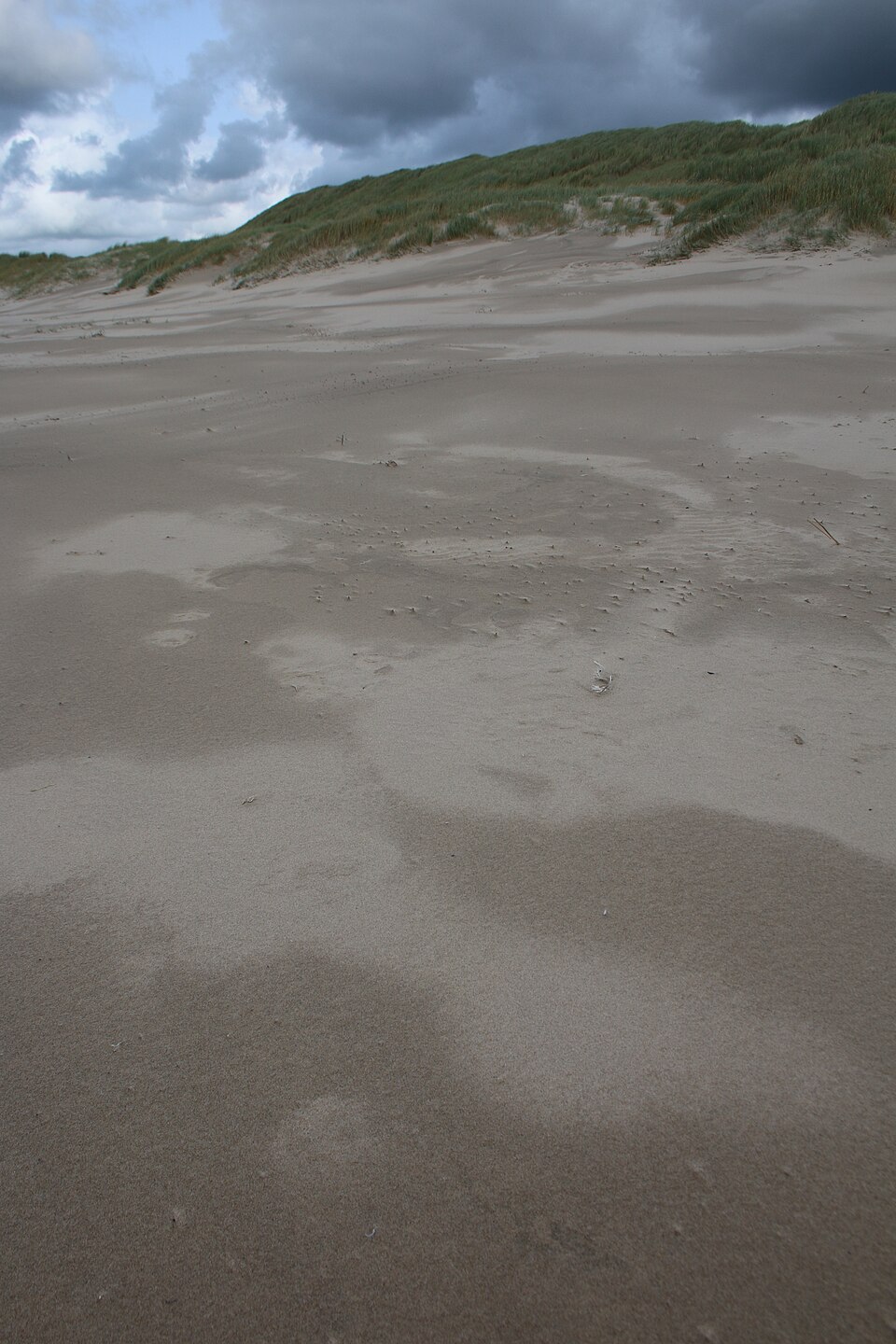
The Schoorl Dunes form one of the widest and highest dune landscapes in the Netherlands. The ground rises quickly from the edge of the village towards high sandy summits, heath and woodland. Farther west come open dunes, wet valleys and eventually the outer coastal ridge. A walk therefore feels less like one landscape than a sequence of very different worlds.
Wind and sand created the dune system, but people profoundly altered its character. From the late nineteenth and early twentieth centuries, large areas were planted with pines to stabilise the sand and produce timber. Drifting decreased and extensive woodland developed. At the same time, parts of the open dunes and the low nutrient-poor vegetation associated with moving sand disappeared.
Management now seeks a new balance. Woodland remains an important part of the area, but trees and shrubs are removed in selected places to restore open dunes, heath and sand movement. Grazing also helps maintain low vegetation. The aim is not to remove all woodland, but to preserve transitions between sand, heath, grassland, forest and wet valleys.
Room for sand, heath and warmth
Open sand is essential for species requiring warmth and bare ground. Sand lizards bask along sunny edges and seek cover in low vegetation. Butterflies such as the small heath benefit from nutrient-poor grasslands and sheltered open patches. Mosses, lichens and small pioneer plants colonise soils where tall grasses and shrubs do not yet dominate.
Heath forms a transition between bare sand and closed woodland. Parts of the landscape turn purple in late summer. Stonechats use shrub tops as lookout posts, woodlarks sing above semi-open terrain and linnets search rough margins for seeds. The value of the heath lies in the mixture of low plants, bare patches and scattered shrubs.
The open dunes acquire a different character in the evening. On warm summer nights, the churring song of the nightjar may carry across heath and sand. The bird remains almost invisible by day and hunts flying insects at dusk. Its presence shows that tranquillity, openness and insect-rich transition zones are all required.
From nightjars to fungi
The wildlife changes along woodland edges and within the pine forests. Green woodpeckers search for ants on short grass and open forest margins. Other woodland birds use old trunks, cavities and dense canopies. Fungi appear among moss, litter and sand in autumn. They live in association with tree roots or break down dead organic material, forming a largely hidden layer of the ecosystem.
Not every open-dune species is easy to find. Wheatears and curlews are scarcer, and sightings vary between seasons and years. The same applies to many butterflies, reptiles and fungi. The Schoorl Dunes provide suitable habitat, but observations still depend on weather, timing, tranquillity and luck.
Wet dune valleys occur locally between the high ridges. Rainwater or groundwater remains near the surface for longer here, supporting plants different from those on the dry slopes. These wet hollows increase diversity but are sensitive to drying and nutrient enrichment. Together with open sand and heath, they show that dune nature includes far more than dry sandy hills.
A dune landscape that keeps changing
Recreational pressure is high. Numerous walking, cycling and riding routes enter the area from Schoorl, Groet and Camperduin. Vulnerable zones are therefore not accessible everywhere, and seasonal or local restrictions may apply. The public routes are freely accessible and no guide is needed. Height differences, loose sand and long distances can nevertheless make a trip demanding.
The scale of the landscape becomes clear from the higher dunes. Woodland appears as dark blocks between heath and open sand, while paths disappear towards the coast. The sea may still be out of sight, but wind and salt air reveal its proximity. Elsewhere, the forest closes in and the coast feels unexpectedly distant.
The Schoorl Dunes are valuable because stabilised and moving landscapes exist side by side. Pine woodland reflects a period when drifting sand had to be controlled. Restored sand areas show that movement is once again recognised as an ecological value. Between them lie heath, grassland, woodland edges and wet valleys, each supporting different species.
A walk here therefore reveals neither an untouched coastal landscape nor an ordinary production forest. It is a dune area repeatedly changed by wind, planting, fire, recreation and restoration. That layered history shows how much management is needed to give sand, heath, woodland and vulnerable species room beside one another.
What can you see when?
The months below show when a sighting is most likely. Wildlife remains unpredictable.

Sand lizard
Bask on warm open ground and dart into cover when disturbed. Sunny sandy margins with moss and low vegetation are particularly promising.

European nightjar
Listen for the distinctive churring song at dusk, especially on warm summer evenings over open dunes and heath.

European green woodpecker
All yearListen for the laughing call and watch open grassy ground near woodland edges, where green woodpeckers often search for ants.

Woodlark
Look and listen for song flights above open dunes and heath, especially in semi-open areas with short vegetation and plenty of quiet.

European stonechat
Stonechats often perch on shrub tops and other low lookout points. Heath, open dunes and edges with scattered low scrub are good places to search.
Common linnet
Watch for linnets feeding and singing in rough, scrubby areas, often in small groups around seed-rich vegetation and open edges.
Northern wheatear
Wheatears use open sandy ground mainly during migration and are scarce in the dunes. Treat any sighting as a bonus rather than an expected encounter.

Eurasian curlew
Listen for the unmistakable bubbling call over open dunes and nearby areas. Sightings vary considerably by season and year.
Common heather
The heath turns purple in late summer, when flowering is at its most striking across the heathland sections.

Sheep's-bit
Look for the small blue flowers on nutrient-poor, sunny open ground, particularly where open dunes and low vegetation are being restored.
Small heath
Small heaths fly low over sparse grassy dune habitats, especially in warm weather on open, nutrient-poor ground.

Black birch bolete
Fruit bodies appear in autumn near birches and along damper woodland edges. Search around birch-rich margins when conditions are moist.
Common earthball
Fruit bodies appear on sandy ground and beside paths, becoming most conspicuous in autumn when fungi emerge along paths and woodland edges.