
The story of this place
Where water replaces roads
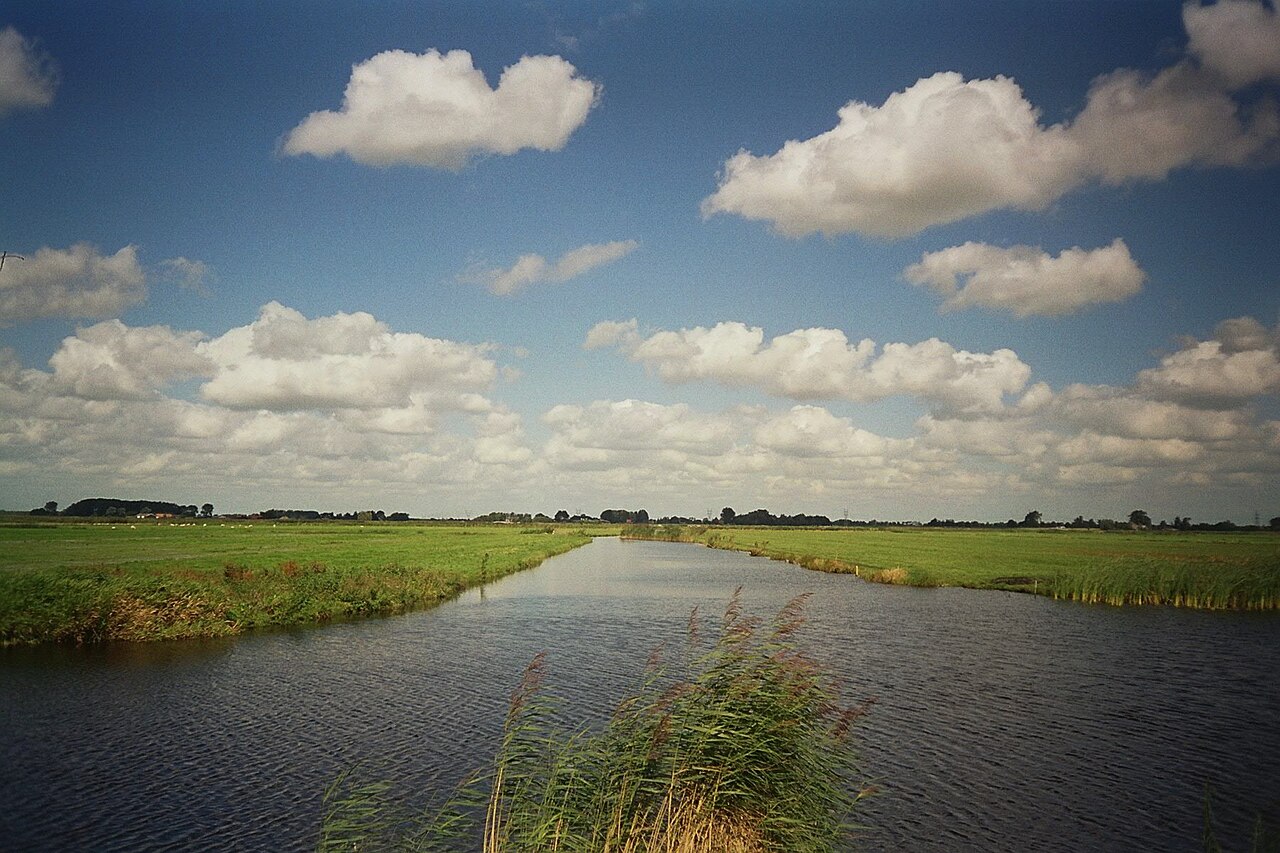
The Wormer and Jisperveld lies between Wormer, Jisp, Neck and Oostknollendam. From its edge, it appears to be an endless plain of grass and water, but the landscape consists of thousands of narrow plots separated by ditches and waterways. Roads barely penetrate the interior. Many meadows, reed beds and nature plots can only be reached by boat.
The subsoil consists of peat formed after the last ice age. In the wet landscape, dead plant material accumulated into a thick layer. Peat mosses, reeds and sedges all contributed to its growth. The present soil is the compacted and partly decomposed remnant of a much thicker peat landscape.
From the Middle Ages onwards, inhabitants dug ditches to drain the peat and make farming possible. Long narrow plots developed from villages and original reclamation axes. Small ditches carried water into broader waterways. A landscape emerged in which strips of land and water constantly ran beside one another.
Drainage enabled farming but caused subsidence. Once peat dries, it compacts and decomposes through contact with oxygen. The surface sank and water levels had to be controlled with increasing precision. The area became trapped in a fragile balance: too much water makes use difficult, but too little accelerates peat loss.
The wet and difficult-to-reach land was used relatively extensively. Cattle grazed the meadows and farmers harvested hay from plots often accessible only by barge. Livestock, hay, tools and manure travelled over water. The ditches were therefore not only drainage channels but also the roads of the polder.
That character still exists. Bridges are absent in many places and the plots lie like green islands in the water. Farmers and nature managers travel to their land in flat-bottomed boats. Machinery, livestock and cut reeds may still have to be transported by vessel. From the water, the fragmented structure becomes clear.
Meadow birds in a wet landscape
The open grasslands are important for black-tailed godwits, lapwings, redshanks and oystercatchers. In spring, godwits stand on fences and posts and call loudly when danger approaches. Redshanks feed along wet depressions and ditch margins. Lapwings use short vegetation and bare patches, while young godwits need cover and abundant insects.
High water levels, herb-rich grass, tranquillity and adapted mowing are essential. When grass is cut early and all at once, nests and hiding places disappear. When fields dry out, worms retreat deeper into the soil and food for birds and chicks declines. Nature plots and participating farms are therefore mown later and in stages.
After the breeding season, the area becomes a resting and feeding ground for migrants and winter visitors. Wigeons gather on broad waters and graze on the meadows during quiet periods. Northern shovelers strain small aquatic animals and plant material from shallow water. Teals, gadwalls, geese and coots use the same combination of pools, ditches and wet grasslands.
From open water to sphagnum reedbeds
Along old peat cuttings, banks and quiet ditches, open water slowly fills with vegetation. Aquatic plants, reeds and root mats extend into the water. A floating soil develops among decaying plant remains and provides a surface for new species. When peat mosses become increasingly important, sphagnum reedbeds develop.
A sphagnum reedbed is more than an ordinary reed fringe. A carpet of peat mosses grows among the reeds, retaining rainwater and creating acidic nutrient-poor conditions. Species displaced from fertilised grasslands can survive here. Without management, however, this vegetation slowly changes into tall herbs, scrub and eventually wet woodland.
On a few plots, succession has progressed towards wet lowland heath. Heather and crowberry grow among peat mosses. Such heath within an open peat-meadow landscape is rare and vulnerable. Drying, nitrogen and the spread of shrubs and trees can quickly damage it.
Wet tall-herb vegetation grows along broader waters. Part of this flora recalls the former influence of brackish water. Closures and the introduction of fresher water greatly reduced pronounced brackish conditions. Water restoration therefore concerns not only clarity but also the correct chemical composition.
The reed beds provide habitat for marsh birds. From April, the rapid song of the sedge warbler can be heard. Marsh harriers hunt low above reeds and grasslands. Bitterns usually remain hidden, but their deep calls may carry far across the area in spring.
The root vole also belongs to this wet mosaic. It lives in damp grasslands, reed fringes and tall vegetation. Islands and broad ditches often keep competing vole species at a distance. When plots dry or become connected to drier land by dams, this advantage disappears.
At dusk, pond bats hunt just above broad waterways. They use dark channels as flight routes and feeding grounds. Uninterrupted water connections, abundant insects and little bright lighting are important. A quiet waterway by day becomes an aerial corridor after sunset.
A landscape that must stay wet
Fish, aquatic insects, snails and freshwater mussels live below the surface. Their habitat depends on clear water, sufficient oxygen and careful ditch management. If all ditches are cleared at the same time, shelter and wintering habitat disappear. Phased maintenance always leaves part of the vegetation intact.
Management is labour-intensive. Sphagnum reedbeds must be mown and the cut material removed. Shrubs and young trees are cleared to preserve open conditions. Because many plots are accessible only by boat and the soil supports little weight, this work is time-consuming.
The area is also under pressure from subsidence, nitrogen, nutrient-rich water, drying and agricultural change. Water seeps towards deeper surrounding polders. Low levels accelerate peat decomposition, while higher levels may complicate grassland use. Water, farming and nature therefore cannot be managed separately.
A boat trip from Jisp or De Poelboerderij reveals the structure most clearly. Broad waterways suddenly narrow into ditches or open onto peat pools. Cattle stand on plots without visible access roads, and every bend reveals a new island of grass, reeds or peat.
The Wormer and Jisperveld is neither an untouched marsh nor an ordinary agricultural polder. It is a landscape drained, navigated, mown and grazed by people, yet water has always remained the determining force. Grasslands, ditches, reed beds and floating peat vegetation are different parts of the same wet system.
Here, the boundary between land and water is exceptionally narrow. A meadow rests on compacted peat, a reed fringe grows from a floating root mat and a ditch serves simultaneously as field boundary, waterway and habitat. The area remains alive because it has never become entirely land or entirely water.
What can you see when?
The months below show when a sighting is most likely. Wildlife remains unpredictable.
Black-tailed godwit
Black-tailed godwits return to the damp grasslands from March. In April and May, their calls, display flights and loudly alarming adults are especially noticeable above the fields.
Common redshank
Redshanks search wet ditches, ditch margins and shallow banks for insects and other small prey. Their clear alarm call carries a long way across the open landscape.
Eurasian wigeon
In autumn and winter, large flocks of Eurasian wigeon rest on broad waterways and pools. During quiet periods, they move onto the meadows to graze, often giving their distinctive whistling calls.
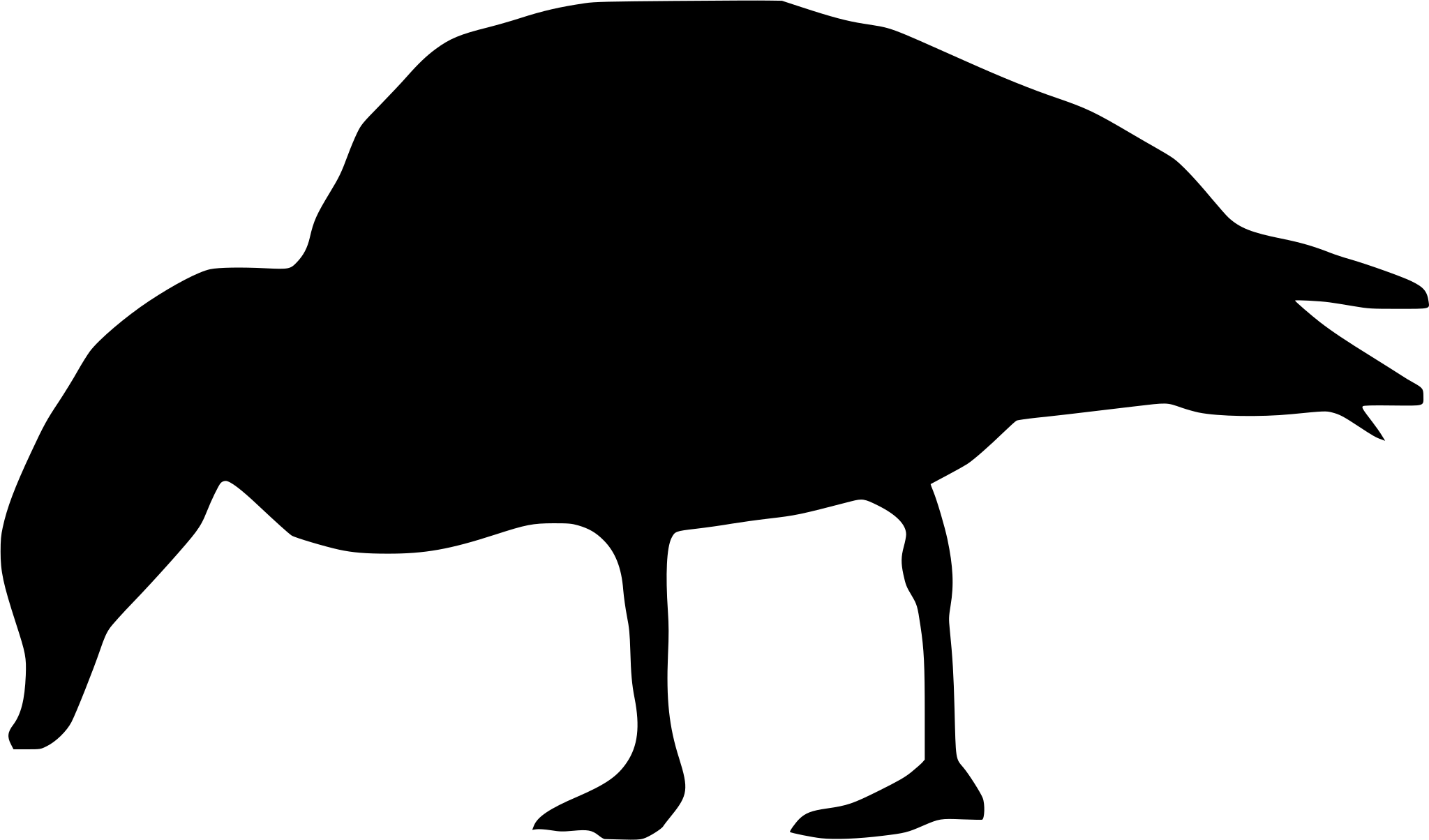
Northern shoveler
All yearNorthern shovelers often swim in calm, shallow water, filtering small aquatic animals, seeds and other food with their broad bills.
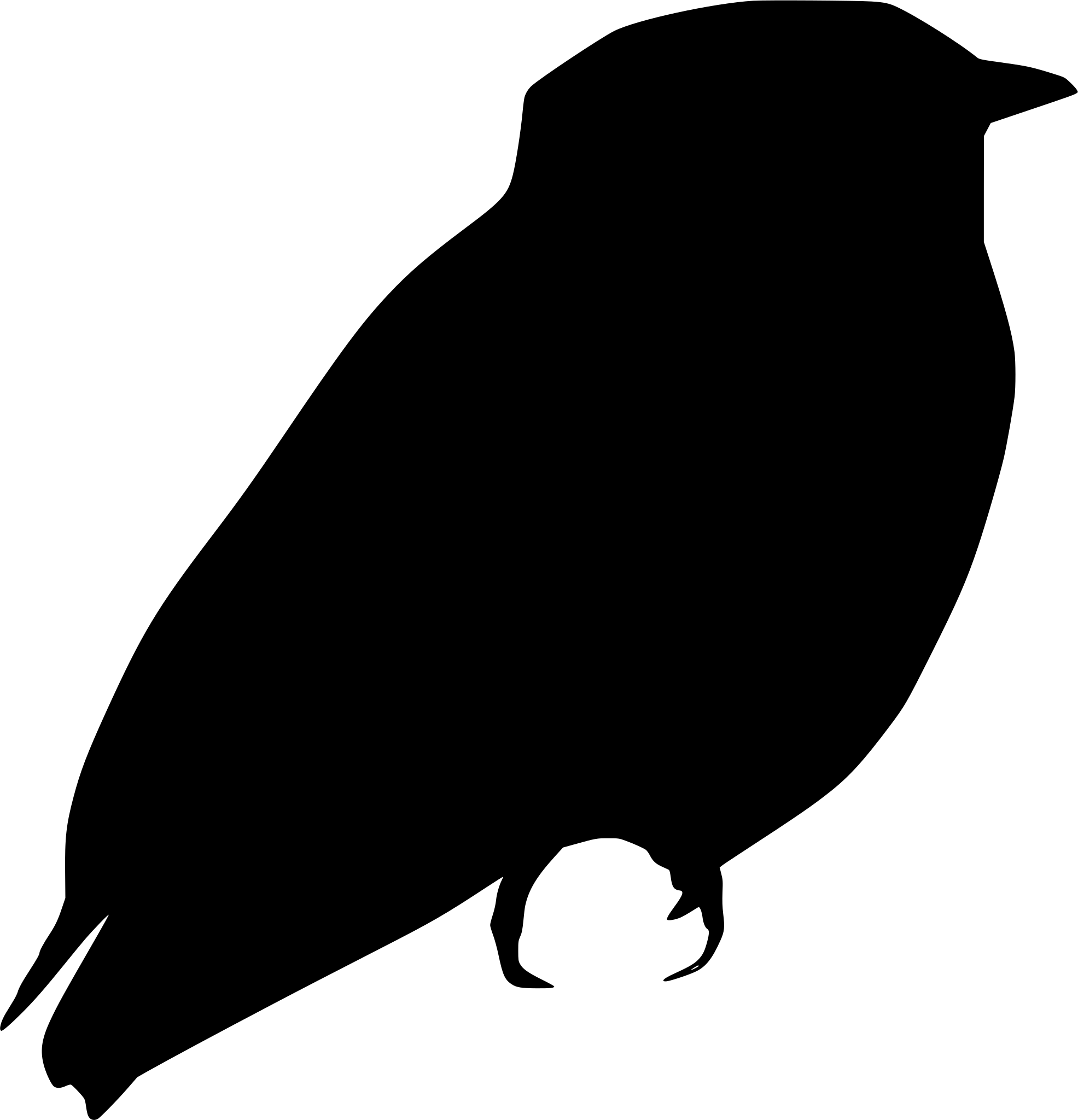
Sedge warbler
From April, the rapid, scratchy song of the sedge warbler comes from reed margins and damp rough vegetation. The bird often sits low on a reed stem or shrub.
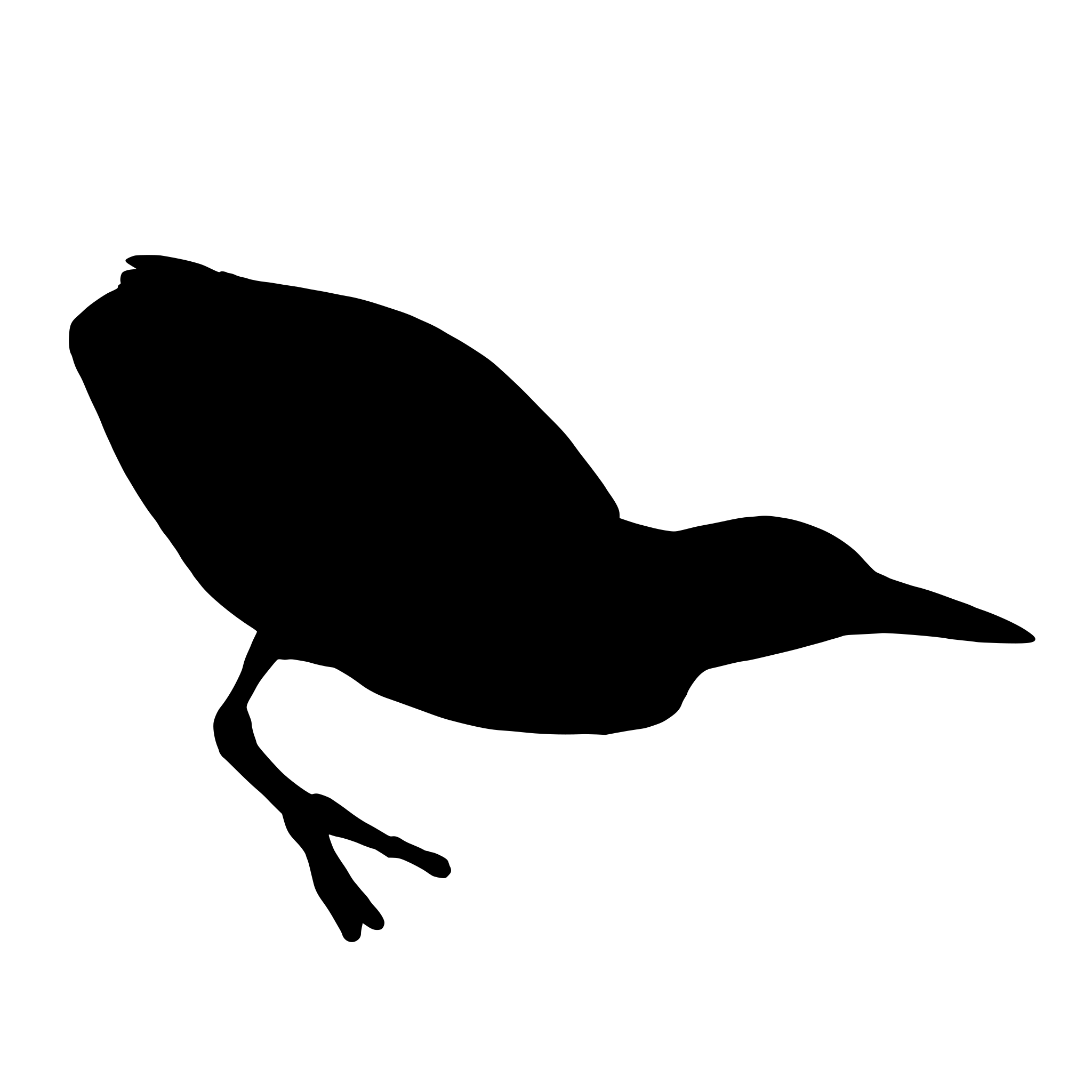
Eurasian bittern
Bitterns usually remain hidden in broad reedbeds. In spring, their deep booming call may carry across the marsh; seeing one in flight is always a lucky encounter.
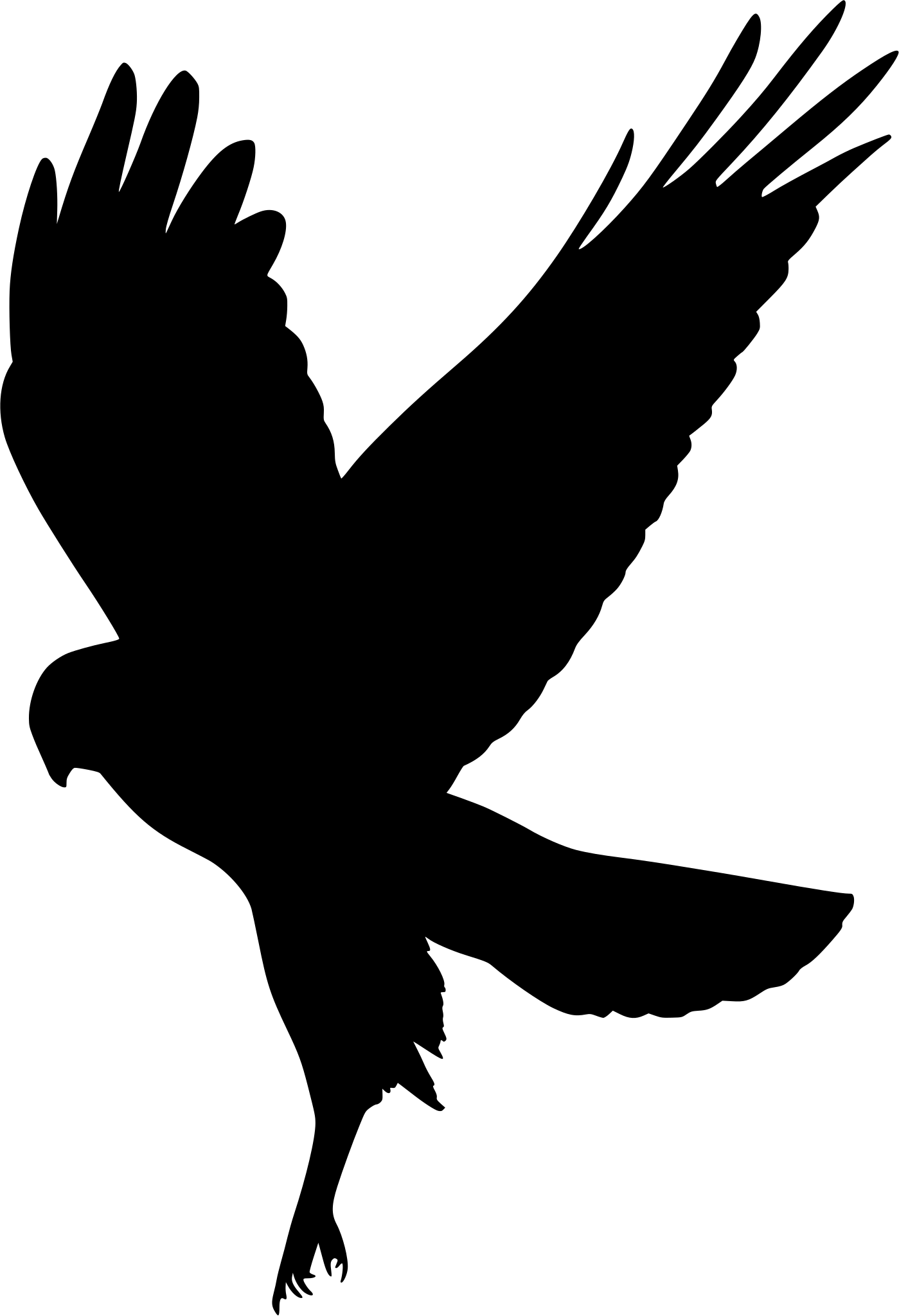
Western marsh harrier
Watch above reedbeds and open grassland for a low, buoyant hunting flight. Marsh harriers search these areas for small mammals, young birds and other prey.
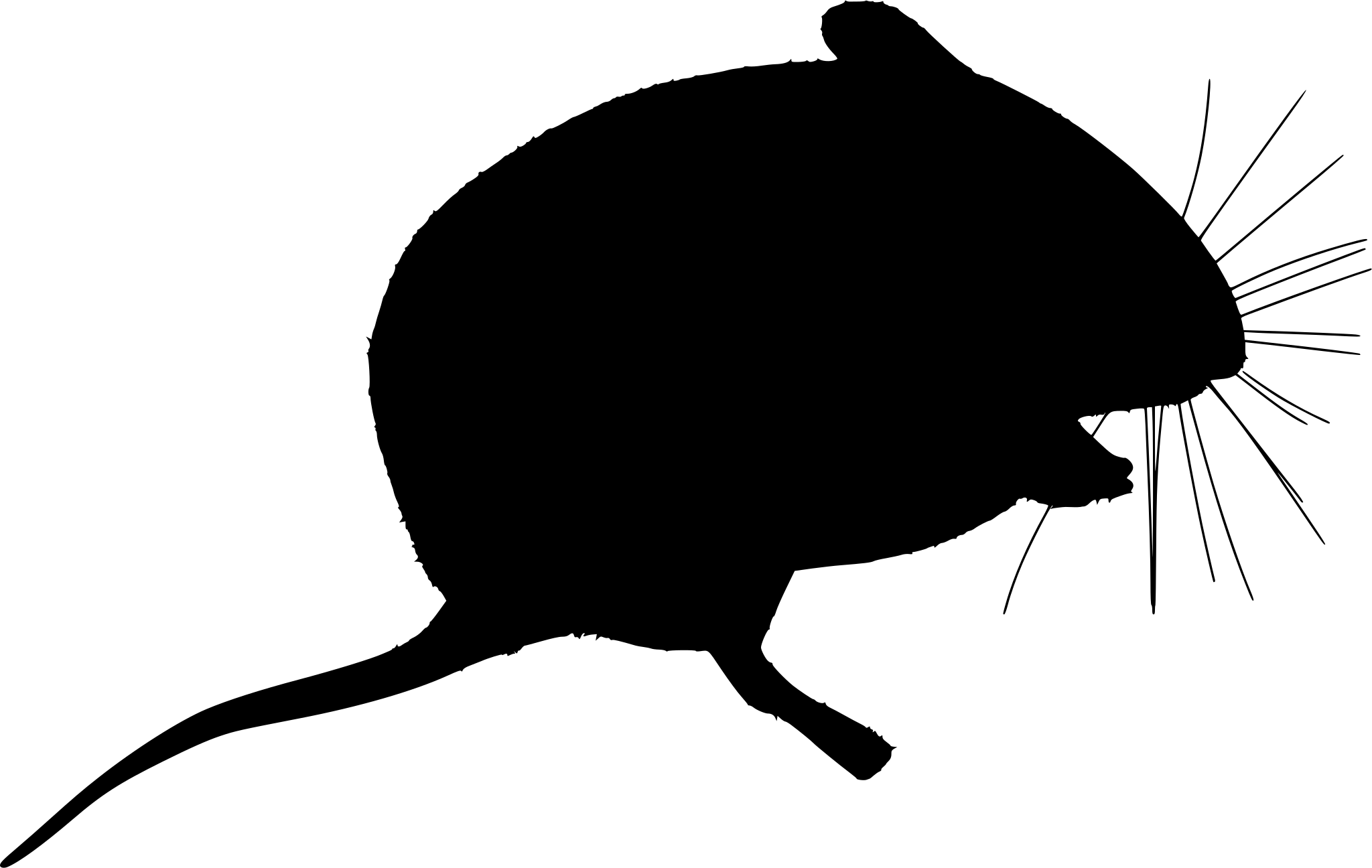
Root vole
All yearThe root vole lives hidden in wet grassland, reed margins and rough vegetation. Sightings are rare, but isolated wet plots provide important habitat.
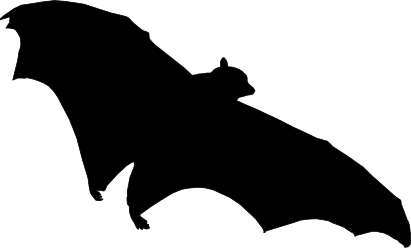
Pond bat
On mild evenings, pond bats hunt just above broad, dark waterways. They fly fast and low, taking insects almost directly from the water surface.
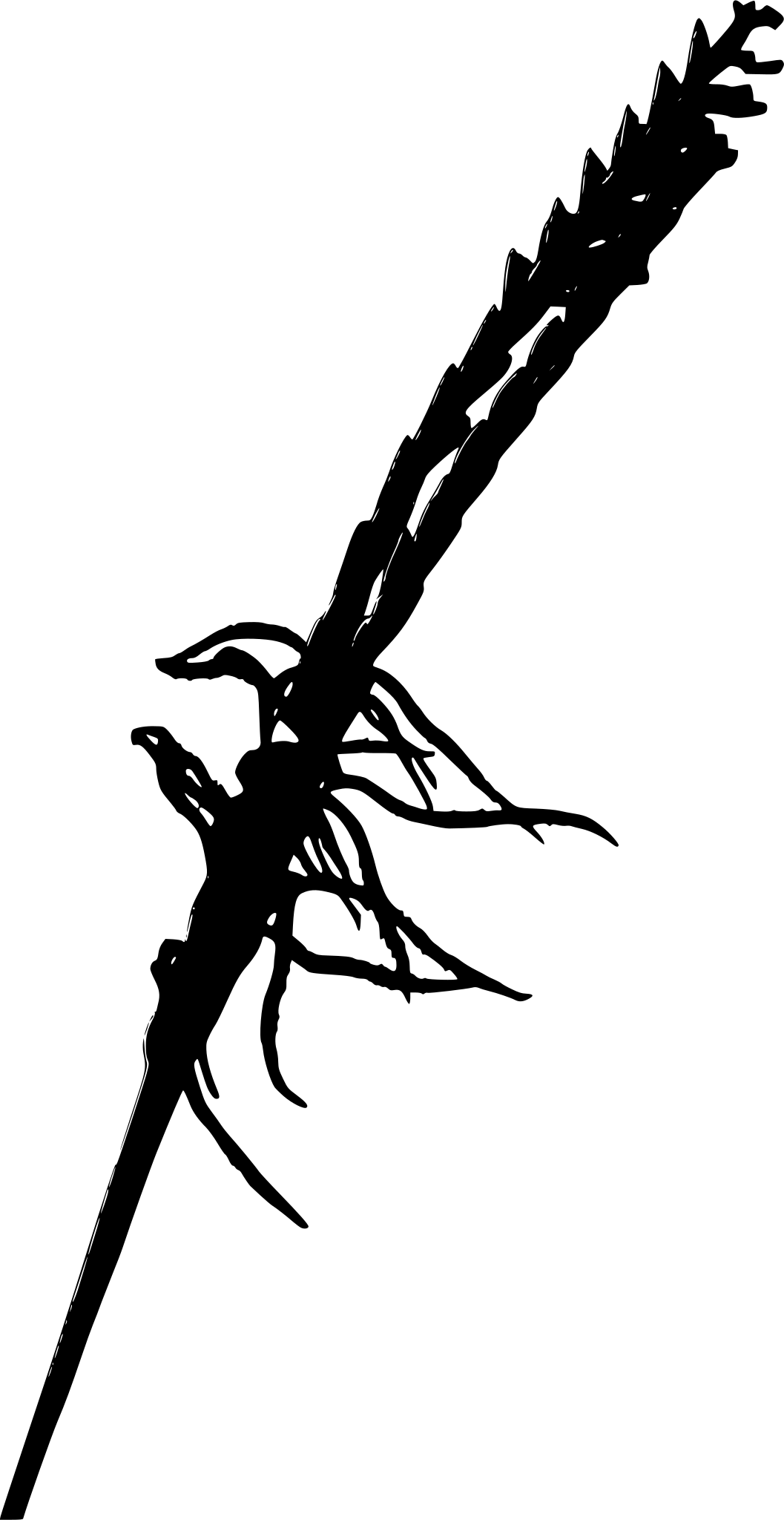
Sphagnum reedbed
In old infilling margins, reeds and sphagnum grow together on soft, sometimes floating ground. The finer differences between mosses, ferns, sedges and reeds are most visible in spring and summer.
Wet lowland heath
On a few vulnerable peat plots, heather and crowberry grow among sphagnum mosses. The low heath may turn purple in late summer, although many sites lie outside accessible routes.