
The story of this place
When a ship does not return
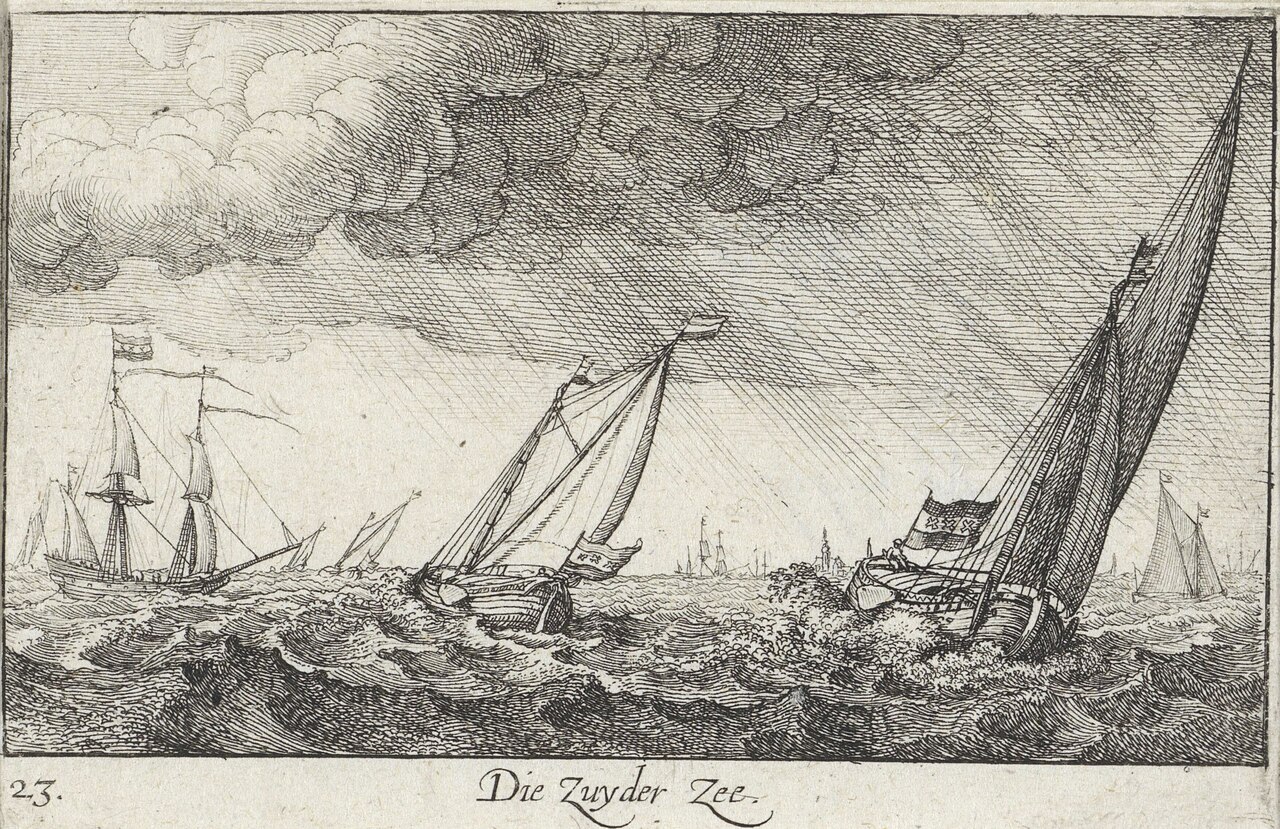
On the old Zuiderzee a ship could disappear without anyone knowing exactly where or when things had gone wrong.
In the morning it sailed out. A sail on the horizon. A hand raised from the deck. A woman on the quay who kept watching for a moment longer. By evening it was supposed to return. A mast among the other masts, voices in the harbour and wet rope on the quay. But sometimes the place remained empty. Then people looked at the water longer than was good for them.
The sea did not always answer.
It might return a plank, a barrel or a piece of sail. Sometimes nothing. Only wind against the shutters, black sky above the water and people unwilling to say aloud what they feared. In the villages and towns around the Zuiderzee everyone knew what waiting meant. A ship that did not return left more than silence. It left a question that sounded different in every house.
Where had it gone?
A ship sailing against the wind
Stories grew from that waiting. Along different parts of the Zuiderzee people told of strange vessels appearing in heavy weather. It was not always the same ship and not always the same place. Sometimes it was a dark hull in the storm air. Sometimes a vessel seemed to sail higher than the waves. Sometimes lights burned on the masts. One motif returned again and again: the ship sailed where an ordinary ship could not.
It moved against the wind.
Not labouring or plunging like a vessel fighting for every metre. It glided. The sails stood full while the wind came from the wrong side. It sought no harbour and carried no recognizable flag. Whoever saw it did not expect rescue. The ship was regarded as an omen. Somewhere someone would not return.
An omen on the Zuiderzee
Around Schokland the story acquired its own sharpness. The land lay low in the water and storms were always close. In local tradition a dark ship could appear above the restless sea, not only on the waves but at times almost above them. Its hull stood out against the sky. Its course was wrong. Below, water struck the coast. Above, something moved that no skipper seemed to be steering.
Other shores had their own versions. The Zuiderzee was large enough for local variants to arise and small enough for the same fear to travel from harbour to harbour. Skippers repeated what they had heard. Families connected new losses with older tales. In this way the ghost ship became not a vessel with one fixed name or captain, but a shape into which many disappearances could merge.
Sometimes bluish light accompanied it. Light on the masts or above the rigging, visible during thunder and severe weather. Later people might speak of St Elmo’s fire, a natural phenomenon that can appear on mastheads. But that explanation does not remove how it must have looked from a dark quay. A strange ship moving against the wind with cold light above its masts brought no comfort.
It seemed as though the sea knew something.
Perhaps a botter was sinking somewhere. Perhaps a mast broke or a wave swept across a deck. On land people saw only a dark form. Far away a real crew fought for its life. The ghost ship did not come to save them. In the story it made visible what was still hidden elsewhere.
That may have been the most dreadful part: the distance.
Lamps burned behind windows. Hearths gave warmth inside houses. People stood dry beneath the church tower. Yet the sea entered all the same, not as water over the threshold but as a sign on the horizon. A black ship. Full sails against the wind. A message no one wanted to speak.
The Zuiderzee provided fish, trade, bread and routes to other harbours. But it also held shallows, mist, ice, currents and storms that could turn quickly. Skippers knew the water well enough never to trust it completely. Living with water for a long time does not make it safe. It teaches only how suddenly danger can begin.
Loss was rarely anonymous. A ship belonged to a family, a yard, a harbour or a village. When a sail did not return people knew who was missing. The empty water gained names. That is why the image of a ghost ship remained so easily. It was not merely a frightening tale. It gave shape to everything that failed to come home.
The horizon at Enkhuizen
Enkhuizen is not the exclusive place of origin of one fixed version. The town is, however, a powerful anchor for the wider Zuiderzee tradition. Everything here still turns towards the water: the harbours, old houses, quays and open horizon. The sea changed its name after the Afsluitdijk was built, but the space remained. Water up to the sky. Low clouds moving in. A distant line that sometimes disappears.
Looking across the IJsselmeer from Enkhuizen therefore still brings you close to the world in which such stories could arise. Not because one ghost ship demonstrably belonged here, but because waiting, sailing and loss were deeply rooted in the town and surrounding landscape.
Imagine a storm evening.
The quay is wet. Ropes strike against masts. Rain drives sideways through the harbour. Someone points outward. At first another person sees only a dark stain. Then a sail seems to appear. It moves. Not with the wind, but against it.
No one needs to explain what that meant in the old story.
The ship has no fixed name. No captain from one reliable account. It is built from botters that failed to return, crews that vanished and families that kept staring at an empty horizon. From all those losses one dark image emerged.
A ship that sailed where no ship could sail.
After the Afsluitdijk the water changed. The Zuiderzee became the IJsselmeer. Part of the old fishing world disappeared and storms had less freedom. But stories do not vanish when a landscape changes. Sometimes they remain precisely as memories of what can no longer be seen directly.
The ghost ship therefore continued to sail in the imagination. Not because a black hull hangs above the water every night and not because the tale must be proven. It remained because people beside open water keep looking for signs. A light that is wrong. A sail that stays visible too long. A shadow moving against the wind. A sound like timber breaking far away.
Stay at Enkhuizen when the weather turns and you may see nothing unusual. A harbour, clouds, wind and water. Yet sometimes a dark shape seems to loosen from the horizon. Sometimes a cloud swells like a sail. Sometimes light runs along a mast.
Then the old Zuiderzee story is close.
A ship without a fixed harbour. Full sails against the wind. No voice from the deck. No hand waving. Only the thought of all those people who once sailed out across the water and did not return. And of a sea that in the stories still knows how to show their final voyage.