
The story of this place
A robber with many names
Nothing along the Elandsgracht seems willing to whisper any longer.
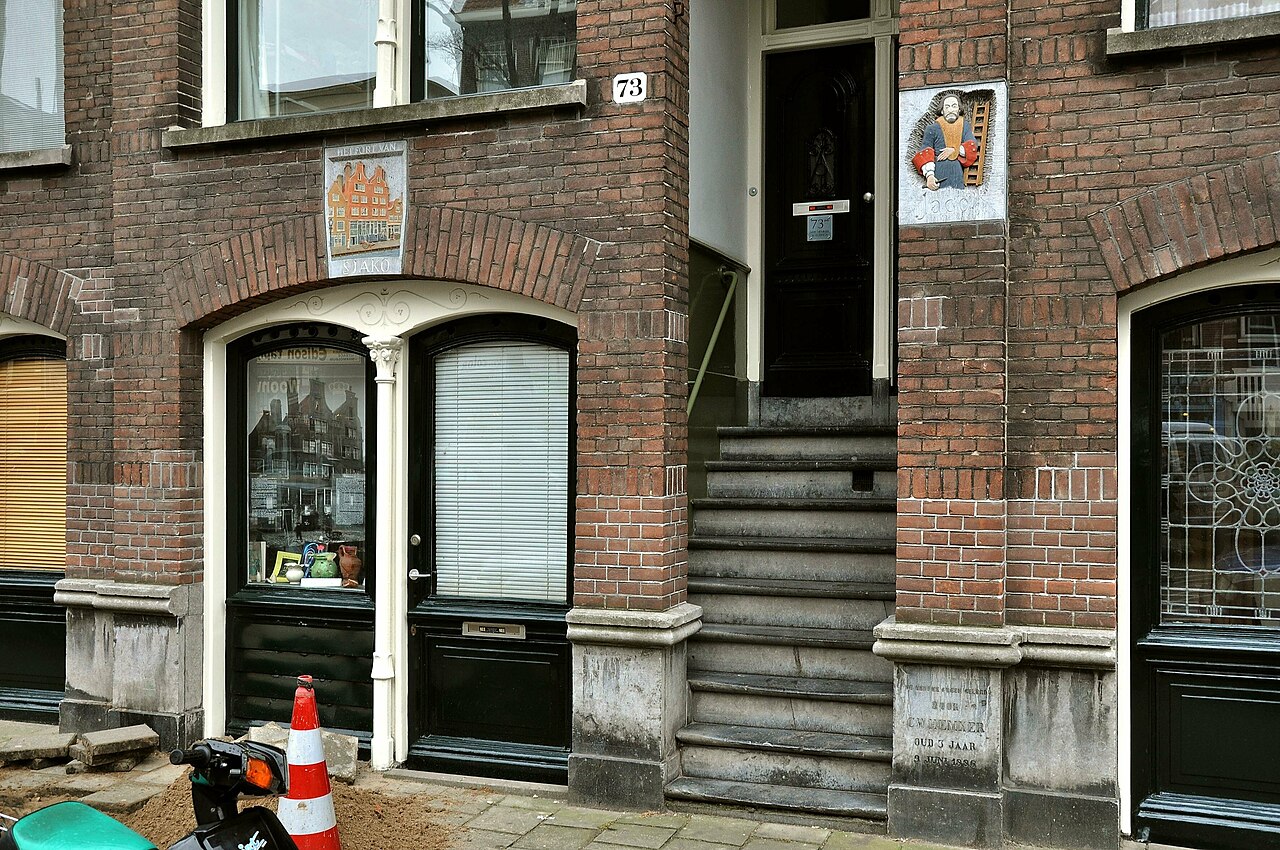
The street has become ordinary. Cyclists pass. Traffic moves between brick façades and windows. People are on their way to work, a shop or home. Anyone unaware of the story sees no robbers’ den and no hidden underworld. Only a gable stone recalls the name that remained attached to this place: Sjako.
He was also called Jaco, Sjaco or Sjakoo. Behind those names stood Jacob Frederik Muller, a Hamburg-born robber active in and around Amsterdam in the early eighteenth century. The historical Muller was no innocent folk hero. His name was connected with theft, violent raids and fear. People were robbed and assaulted. Some attacks resulted in deaths.
Yet after his arrest and execution he was remembered as more than a criminal. A second Sjako grew around his name: a man who vanished faster than officers could search, knew secret exits and supposedly hid in a maze of rear houses on the Elandsgracht.
The Fort of Sjako
That was the beginning of the Fort of Sjako.
What the complex truly looked like is difficult to establish. Later stories transformed it into an almost impregnable hiding place. Behind ordinary façades, rooms, courtyards, cellars and rear houses were said to have been connected. A door led not outside but into another room. A cupboard might conceal a passage. A hatch supposedly lay beneath a floor. Anyone believing Sjako had been trapped discovered that the robber had already appeared somewhere else.
In the stories, the city gave him ever more corridors.
Imagine the Elandsgracht on a dark night. Outside stand officers carrying lanterns. Someone pounds on a door, once and then harder. A voice orders those inside to open it. Everything remains silent.
Then comes the sound of wood sliding across wood.
A plank is lifted. A hatch falls shut. Someone holds his breath. When the men finally storm inside, the room is still warm. They search beneath beds and behind curtains. They open cupboards and doors. Sjako has vanished.
Whether escapes happened in precisely this way can no longer be proven. The Fort grew mainly through later storytelling. In those stories Sjako knew every rear house and every escape route. The Jordaan’s narrow plots, courtyards and confusing rear buildings provided a believable setting. Storytellers could supply everything else.
From robber to folk hero
In this way a genuinely dangerous robber slowly became a figure larger than his own life.
Some tales claim that Sjako stole mainly from the rich and helped poor residents. He supposedly refused to betray his companions and resisted an unjust government. There is little firm historical support for that image. It resembles the way folklore can later transform a criminal into a rebellious hero.
That romantic picture must not erase his victims. The historical Sjako belonged to a gang that raided farms and houses. Presenting him only as Amsterdam’s Robin Hood turns actual violence into an attractive adventure. The fear surrounding his name was not invented.
At the same time, that fear helps explain why the story continued to grow.
Amsterdam was a city of gates, alleys, warehouses, rear rooms and cellars. The boundary between a home, workshop and hiding place could be thin. For those living outside the law the city offered many opportunities to disappear. For residents telling stories about them, every dark rear house became a possible passage.
On the Elandsgracht Sjako was therefore given a fort without walls or towers. It consisted of smoke, low ceilings, creaking floors and doors whose destinations no one could be certain of. In the stories it contained tools, weapons and stolen goods. Children were called indoors after dark. Doors were bolted when his name was mentioned.
The Fort became more than a building. It became the idea that an ordinary street might possess a secret rear side. Behind a respectable façade there could be a room the authorities knew nothing about. A house might seem larger inside than outside. The city itself became a complicit maze that allowed Sjako to vanish again and again.
A story that did not disappear
But eventually the law did find him.
Sjako was arrested and convicted. In 1718 his life ended on the Nieuwmarkt. He was broken on the wheel and beheaded. The punishment was deliberately public and terrifying. His broken body was meant to show that the authorities were stronger than the robber and that no one could evade justice forever.
It was a macabre ending, but not the end of his name.
A body could be broken. A story could not.
After his death Sjako continued to circulate through chronicles, tales and urban memory. Objects associated with him were preserved or displayed. The Fort remained after the actual buildings had changed or disappeared. The old structures on the Elandsgracht were demolished and replaced. That gave the imagination even more room.
What has vanished can be given an endless number of rooms.
Today the gable stone on the Elandsgracht is the tangible anchor. It marks where the Fort was sought in the tradition, but does not prove that a spectacular underground network of escape passages truly existed there. The difference between historical place and legend does not weaken the story. It shows how the city rebuilt a real robber into a figure capable of disappearing through walls.
Anyone who knows his name sees the street differently. A window briefly becomes a lookout. A narrow door appears to lead into a rear house deeper than should be possible. A plank might slide behind a façade. Not because it demonstrably happened, but because the story has reshaped the street in the imagination.
Sjako therefore remains caught between two images. He was a violent criminal but became an urban legend. He caused genuine fear but later gained admirers. His historical life ended on the scaffold. His second life may only have begun there.
Walk along the Elandsgracht as the light drains from the street. Look at the gable stone and the surrounding houses. Imagine not only the robber but also the people who passed on his name. Each storyteller added another door, hatch or escape.
Then the Fort returns once more.
Not as a proven network of tunnels and not as a romantic robbers’ nest. As a dark layer beneath an ordinary street. A lantern moves past a window. Boots sound outside. Somewhere inside, wood slides across wood.
A hatch falls shut.
When the door is broken open, the room is empty.