
The story of this place
From find to person
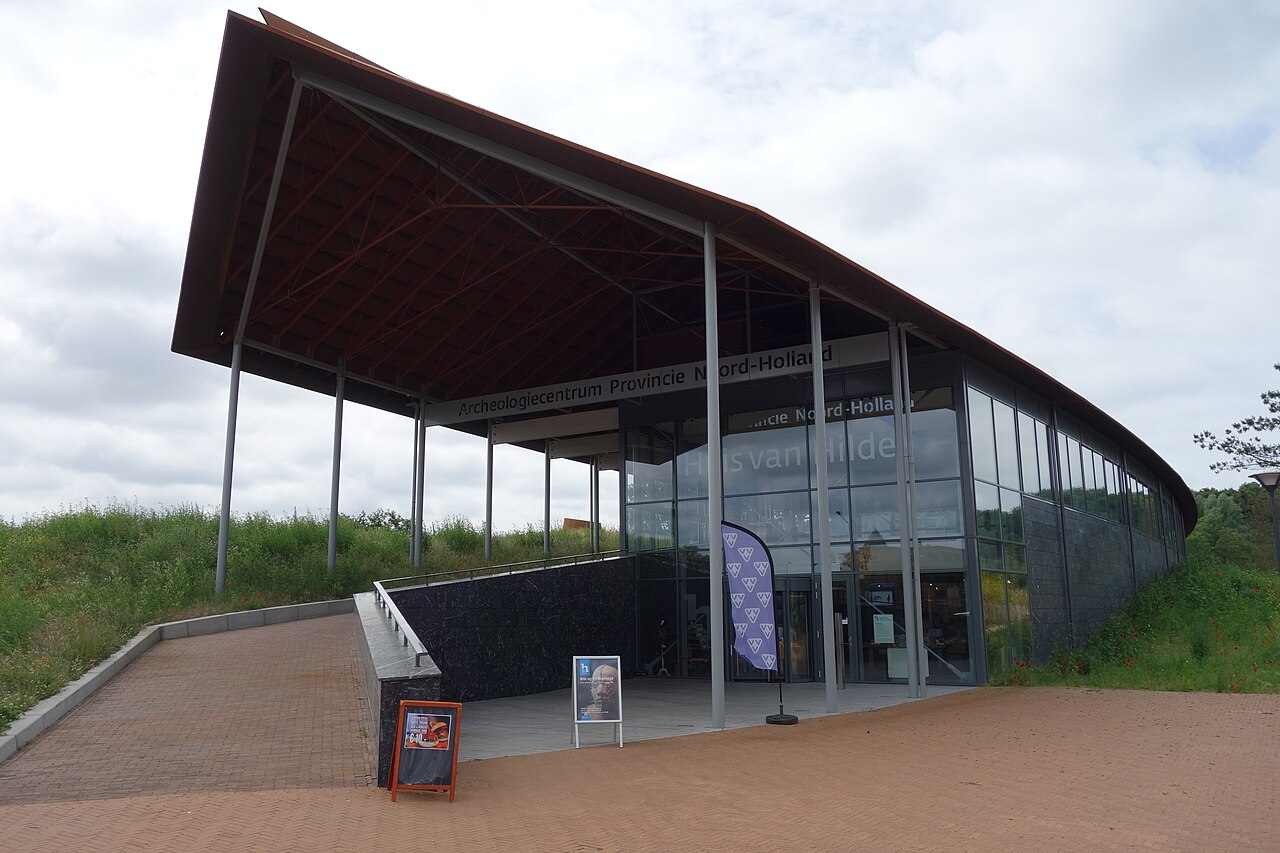
House of Hilde stands in Castricum, directly beside the station and close to the dune landscape. The building itself is modern. It is elongated and designed to preserve, study and display archaeological finds. Yet this is where a large part of North Holland’s ancient history comes together. Not as a ruin, burial mound or dyke in the landscape, but as objects, bones, pottery fragments, tools, jewellery and human remains recovered from that landscape.
Outdoors, age can sometimes be recognised in a wall, rise, ditch or ruin. Much archaeological history, however, lies below the surface. North Holland consists of dunes, peat, clay, polders, towns, villages and former waters. Beneath those layers are traces of people who hunted, lived, travelled, traded, fought and buried their dead. House of Hilde brings such scattered finds together and reconnects them with the places where they were discovered.
The building houses both an archaeological museum and the provincial repository for archaeological finds. That repository is an essential part of the story. A potsherd, coin, bone fragment or piece of metal often says little on its own. Meaning emerges only when the find is carefully preserved, described and linked to its findspot. A small fragment can then reveal something about settlement, trade, food, illness, craft or changes in the landscape.
The collection spans almost the entire history of the province. It contains finds from prehistory, the Roman period, the Middle Ages and later centuries. Stone axes, pottery, coins, mammoth teeth, weapons and skeletons show that North Holland’s history reaches far beyond famous towns and written sources. The focus is not one single place, but the subsoil of the entire province.
The name refers to Hilde of Castricum. She is based on a skeleton found in Castricum. Research and facial reconstruction gave her a recognisable human face once more. A skeleton therefore changes from anonymous bone material into a person from an earlier world. Her skeleton can reveal clues about origin, age, health, diet and the circumstances in which she lived.
A landscape that kept changing
House of Hilde places different layers of North Holland’s past side by side. A prehistoric object from the dunes, a medieval find from a village and an object recovered from a former body of water may seem modest in isolation. Together they reveal a province in constant change. Coastlines shifted, peat was reclaimed, water was diked, settlements grew and older places disappeared beneath new uses.
Many of the finds are not spectacular. Pottery fragments, food remains, building material and worn everyday objects often reveal how people truly lived. The story includes not only rulers, castles and churches, but also farmers, craftspeople, children, travellers, soldiers and residents of small settlements. Archaeology makes ordinary life visible because such lives rarely received much attention in written sources.
What the soil preserves
The location in Castricum suits that story. The coastal region consists of old dunes, beach ridges, wet lowlands and routes that shaped settlement through the centuries. Many finds from the Castricum area show how people adapted to sand, water and changing conditions. The museum is therefore not separate from its surroundings. It stands within a landscape that has itself yielded a great deal of archaeological material.
The repository makes clear that only a small part of archaeology reaches the display cases. Most material is stored, organised and kept available for further research. That work is less visible than an exhibition, but just as important. Without proper storage, the connections between object, findspot and research are lost. The past must not only be excavated, but also preserved for the long term.
This is especially important in North Holland. The soil is continuously altered by water management, construction, erosion and new infrastructure. Archaeological traces may therefore be damaged or disappear. Once an object has been excavated, it cannot be returned to its original layer. Careful documentation and preservation are necessary to prevent finds from becoming isolated objects without context.
Looking at people who disappeared
After a visit, the landscape looks different. A field, car park, bend in a dyke or stretch of dunes seems less self-evident. A burial ground may lie beneath a meadow. An old settlement may be hidden below a road. Pottery may appear in the side of a ditch. The soil of North Holland proves not to be empty ground, but an archive in which traces of earlier lives have been preserved layer by layer.