
The story of this place
Alone in the house
One evening the maidservant was left alone in the large house on the Keizersgracht.
Outside the canal lay still between the tall façades. Inside only a little light was burning. The residents were away. The manservant was not there. The house was usually full of voices, footsteps and doors. Now it had become too large for one person.
Then a sound came from below.
Not the creak of working wood. Not wind along a crack. Something lower. Something more muffled. The soft scraping of men who did not want to enter through the front door. By the cellar or near a small window hands moved in the dark. Robbers. Men who thought that a rich canal house without its master would be easy to break into.
The maid heard it.
In some versions she is called Elsje. In others Anna. But in every story she remains the same. Alone in a large house. Frightened enough to know what is happening. Not frightened enough to flee. She grabs what lies at hand. A knife. Or an axe. Something sharp. Something heavy. A tool that in her hands suddenly becomes something else.
Six robbers, six heads
Below the first man forces his way inside.
He expects no resistance. He expects darkness, loot and perhaps a maidservant who screams and runs. Instead he hears her voice. Soft. Close by. She says she knows where the gold is. Where the silver is hidden. A little farther. One more movement. One more hand on the floor.
Then she strikes.
It happens so quickly that he cannot raise the alarm. His head falls before the others understand why it remains silent inside. Outside the second robber waits. He hears no warning. Only the maid’s voice. Calm again. Luring again. As if the treasure lies just beyond the opening.
He comes in too.
And then the third.
The dreadful part of the story is not only the blood. It is the repetition. Again and again the same dark window. Again and again the same promise. Again and again a man who thinks he is entering a house and instead crawls towards his death. Six robbers vanish from the night in this way. One by one. Without a scream reaching the street.
When the residents return the house is no longer the same.
The cellar is no longer a cellar. The window is no longer a window. The floor, the walls and the stairs carry the after-silence of what has happened. The maid lives. The property is saved. The house is protected. But somewhere below lie six bodies that will not walk out again.
That is why the heads were said to have been placed on the façade.
Six heads high above the Keizersgracht. Visible to everyone who passed the house. Not loose ornament but warning in stone. Look closely, the façade would say. Whoever enters with bad intentions can end here. Not as a robber with loot but as a head without a body above the canal.
What the façade really shows
Standing before Keizersgracht 123 today, you do indeed see six heads.
That is exactly why the story still works. The façade helps it. It gives the tale something to hold on to. Six heads are enough to make the impossible briefly plausible. You look up and the number fits. One, two, three, four, five, six.
But the heads are older, calmer and more learned than the murder tale wants them to be.
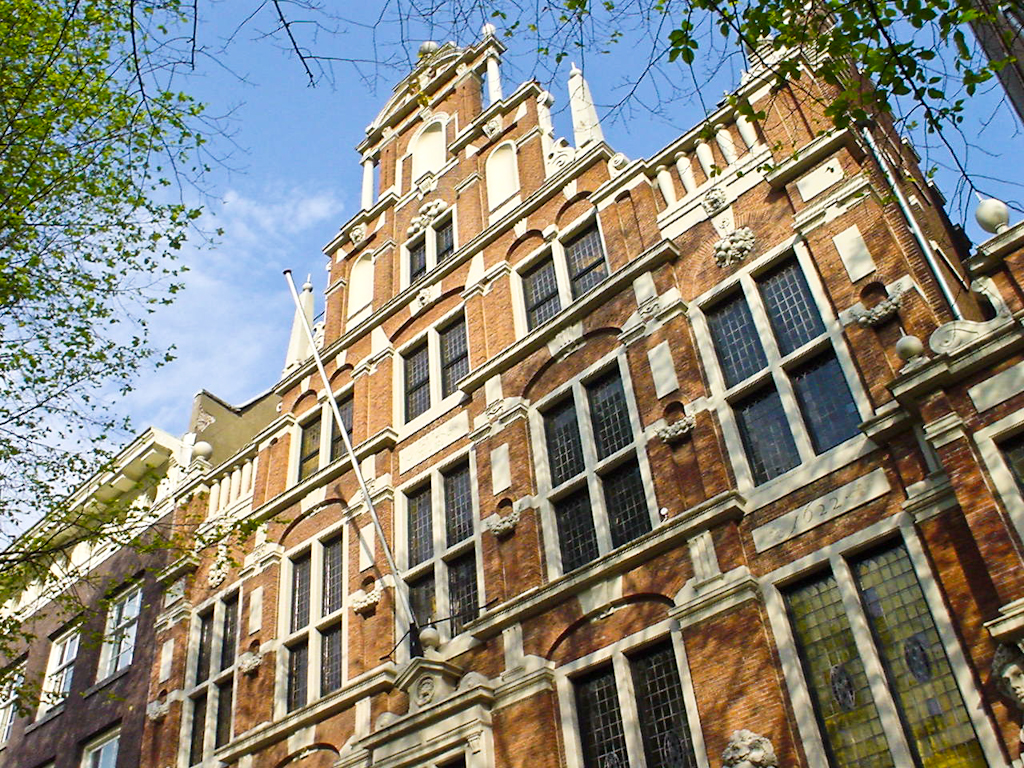
The House with the Heads was built in the seventeenth century for Nicolaas Sohier. A wealthy merchant and art lover. The façade is broad and self-assured. With steps, sculpture and classical references. The six busts are recognised as Apollo, Ceres, Mercury, Minerva, Bacchus and Diana. Deities then. Not robbers. Not severed heads. Not petrified witnesses to a cellar full of blood.
And yet they look different once you know the story.
Apollo is no longer only Apollo. Minerva no longer only Minerva. The orderly world of art, trade, knowledge and classical symbolism gains a darker dimension. The eye sees gods. The ear still hears a plank shifting below. A hatch. A breath. A voice saying that the gold lies just a little farther on.
The name does the rest.
House with the Heads does not sound like a neat architectural description. It sounds too bodily. Too sharp. It names not the façade, not the style and not the owner. It names the heads. And where there are heads, bodies are missing. Thus a distinguished canal façade becomes a place where you automatically think of a crime. Even if the stone says otherwise.
When the city begins to whisper
The tale shifted with time.
Sometimes there are six robbers. Sometimes there is a seventh who escapes and returns later. Sometimes the maid is Elsje. Sometimes Anna. Sometimes the family is at church. Sometimes simply away from home. But the core always remains the same. A woman alone. Men in the dark. An opening to the cellar. And six heads that later appear above the street.
That is stronger than a fixed version.
A court record would make the matter smaller. An urban story grows through gaps, changes and repetition. It fills itself with fear of burglary, admiration for cunning, domestic vulnerability and the quiet satisfaction that the intruders received what they were looking for. Entry into the house. But not into life afterwards.
By day the House with the Heads is a monument.
You see a rich canal house. A façade full of order, stone and seventeenth-century confidence. The busts stand calmly in their places. The canal moves along the quay. People pass without looking up.
But towards evening the façade changes.
The windows darken. Street sounds sink away between the walls. The canal reflects black. Then the six heads no longer seem quite so innocent in their niches. They do not only look down. They seem to keep watch. As if they still know what has been told beneath them. As if the cellar in the story still stands open.
Stand beneath the façade and count them again.
Six heads. Six robbers. Six gods. Six reasons to doubt what you see.
The stone says classical. The city whispers blood.