
The story of this place
A hospital as a self-contained village
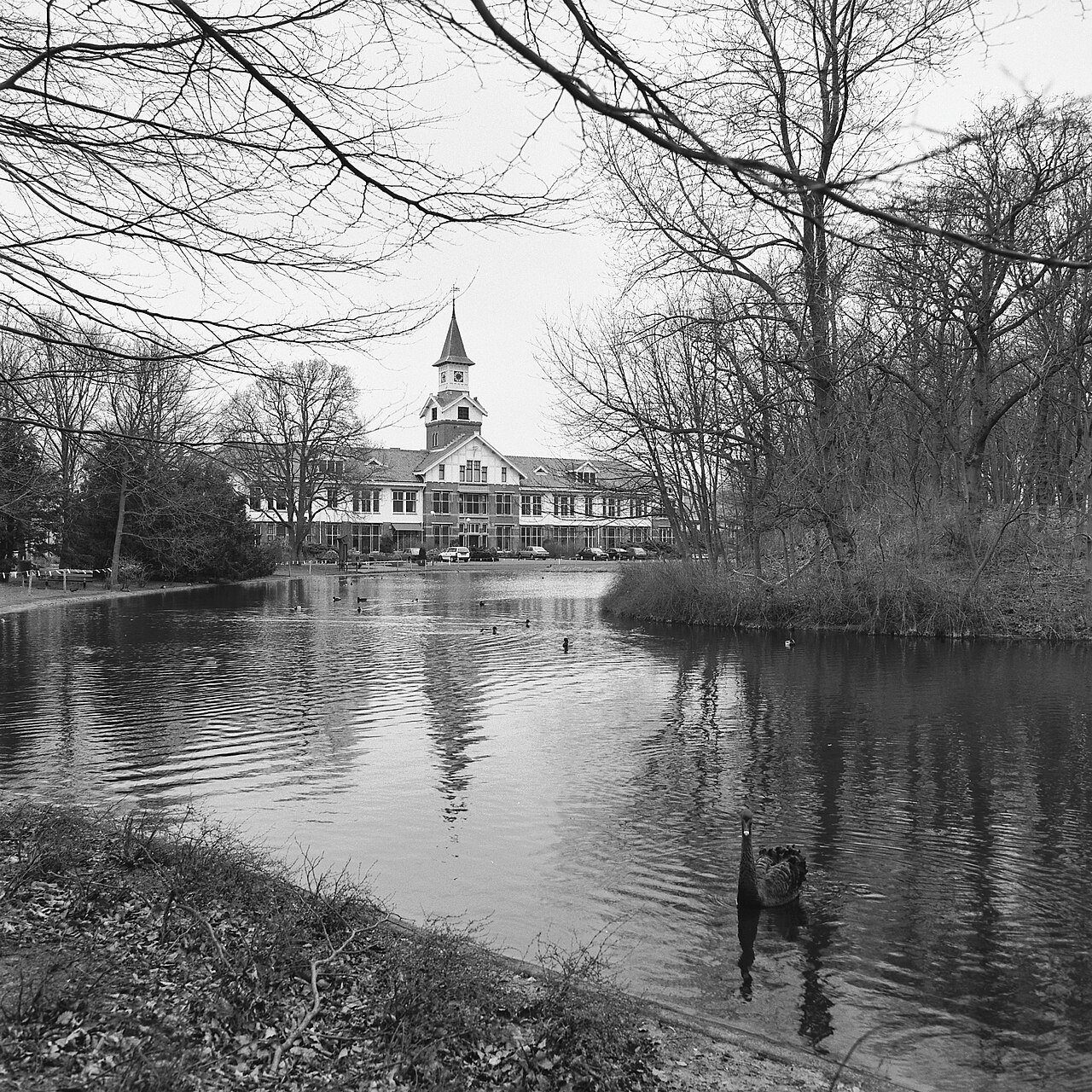
Duin en Bosch lies near Bakkum, where village, woodland and dunes meet. The site opened in 1909 as the Provincial Hospital Duin en Bosch. Behind today’s park-like healthcare and residential landscape lies the history of a carefully designed institution that functioned almost as a self-contained village.
Construction began in 1904. North Holland needed space for new psychiatric care outside the crowded city and away from older asylums that no longer matched changing ideas about nursing and treatment. The area near Bakkum offered fresh air, quiet surroundings and enough room for a spacious pavilion layout.
Around 1900, ideas about psychiatric institutions began to change. Large asylums were no longer viewed only as places of confinement. Regularity, outdoor air, work and greenery were also given therapeutic value. Daily life nevertheless remained strictly organised. Care and supervision, protection and exclusion existed side by side.
Duin en Bosch was designed as a coherent complex. Patient pavilions, staff housing, workshops and independent utility buildings were constructed across the grounds. A church, farm, bathhouse, cemetery and mortuary also formed part of the site. It was far more than a hospital building. Almost every aspect of daily life was contained within the same institution.
Architecture, organisation and its own facilities
The pavilion layout determined how patients were distributed across the grounds. Men and women lived separately. Behaviour, care needs and degree of unrest also influenced placement. The buildings and paths therefore expressed not only medical organisation but a social order as well.
Architect P.W.M. Poggenbeek played an important role in the design of many buildings. Brickwork, steep roofs and wooden details gave the complex a calm and recognisable appearance. The architecture had to be practical while also suggesting domesticity and order.
An institution of this size needed its own services. The water tower, boiler house, laundry and workshops made Duin en Bosch largely self-sufficient. A tram connection brought building materials, goods and coal to the site and was also used for passenger transport between 1914 and 1938.
Rest, work and a world at a distance
Its position among woodland and dunes had a double meaning. The landscape offered quiet and space, but it also created distance from society. Patients were removed from their familiar surroundings and placed in an environment intended to be healthy and orderly. At the same time, they became less visible.
Work played an important role in daily life. Patients could be employed on the farm, in gardens, workshops or the laundry. Such labour was regarded as useful activity and sometimes as part of treatment. It also helped keep the institution functioning. Care, discipline and practical necessity therefore overlapped.
The church and cemetery reveal how complete this world was. The grounds were not only places of treatment and work, but also of prayer, death and burial. Some patients spent much of their lives here and were eventually buried on the site.
A mortuary with a laboratory stood near the cemetery. This combination of care, death and research shows how closed the system could be. Almost every stage of residence and life had its own place within the institution.
From institutional site to monumental landscape
During the twentieth century psychiatric care changed. Large institutional sites gradually lost their self-evident role. Treatment, housing and support were organised differently and social integration received greater attention. Older buildings remained, although some acquired new purposes.
Today, Duin en Bosch is at once a healthcare site, residential area, park and heritage landscape. Its designation as a protected heritage complex in 2004 recognised the coherence of the site as a whole. No single building defines the site; its importance lies in the combination of pavilions, service buildings, avenues, greenery and infrastructure.
Care, power and the limits of protection
Duin en Bosch is sensitive heritage. The avenues and buildings may appear calm and attractive, but behind that beauty are the experiences of people who were admitted sometimes voluntarily and sometimes against their will. There was care and dedication, but also power, supervision, stigma and loss of freedom.
That tension gives the site its meaning. It is neither a ruin nor a hidden object, but a preserved landscape whose social history is not immediately visible. Its architecture can be admired without forgetting why it was built.
Duin en Bosch preserves the memory of a time when psychiatric care was literally placed outside society. The pavilions, water tower, workshops, church and cemetery together form the plan of that world. The site shows how psychiatric care combined care and institutional order with separation from wider society.