
The story of this place
A boundary you were not allowed to cross
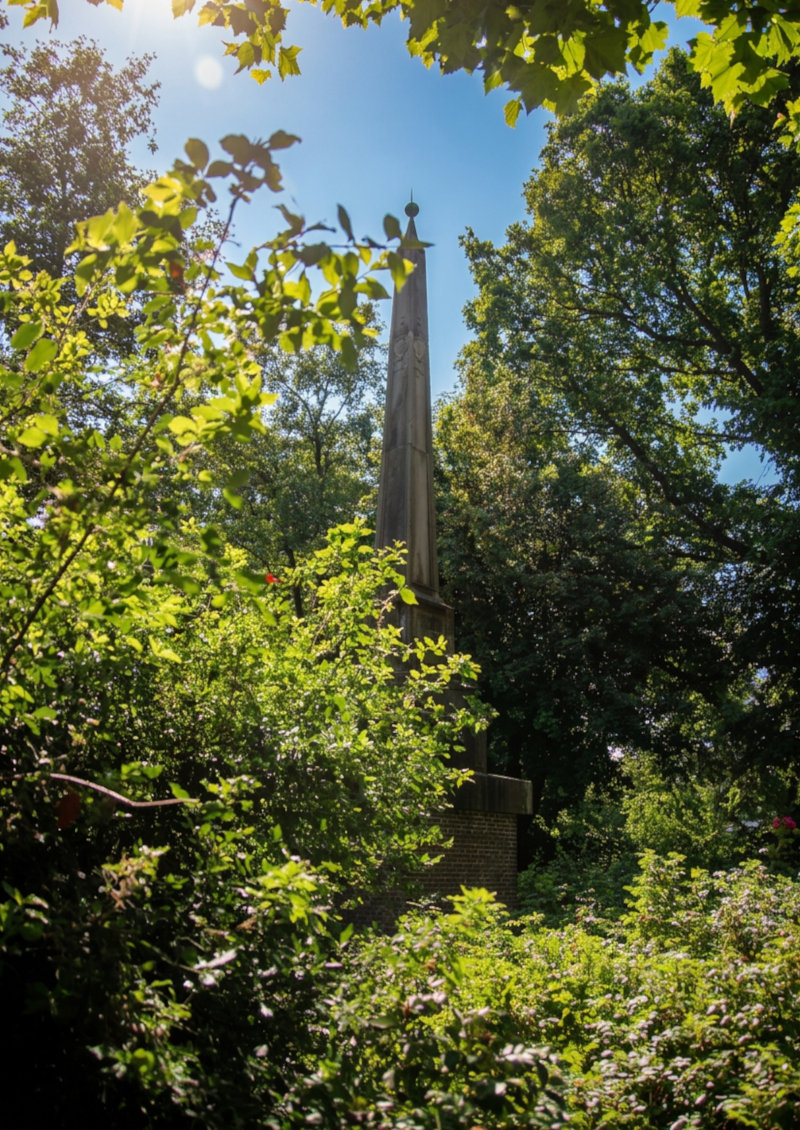
On the Amsterdamseweg in Amstelveen stands a ban post that almost everyone passes without slowing down. Cars slide past. Cyclists watch the traffic. Walkers head towards Heempark De Braak. The post stands still beside the road. Not large. Not threatening. Yet it belongs to an older world in which a boundary was not a line on paper but something hard in the ground.
Anyone banished from Amsterdam knew what such a post meant. This far. No farther. Beyond this point return could mean punishment. The city did not need walls everywhere to make its power felt. Sometimes one post was enough. A visible sign beside the road. A warning for those the city had cast out.
Around Nieuwer-Amstel, that tension lay just beneath the surface of everyday life. Amsterdam was nearby. The fields and villages lay close by. But nearby did not mean inside. Here began other rights. Other lords. Other interests. And where a growing city touches a boundary that boundary rarely remains quiet.
Reinoud and the gaming table
Into that uncertain borderland steps Reinoud van Brederode. Lord of Nieuwer-Amstel, Sloten, Sloterdijk and Osdorp. A man with land and standing. Enough to lose. Perhaps that is why his name clung to a tale that smells of wine, candle grease and cold dice.
According to the tale Reinoud was not outside by the post but somewhere in Amsterdam at a table. Around him sat men who knew when to keep silent. First it was about money. Then jewels. The throws followed one another. Stone on wood. A brief silence. A laugh that sounded just too loud. Another cup. Another stake.
Then it became more serious. What was placed on the table no longer fitted in a purse. No coin. No ring. No chain. It became land. Rights. Villages. Authority. Nieuwer-Amstel itself hung like a shadow over the gaming table. Outside, the city lay in darkness. Inside, the dice rolled once more.
Perhaps Reinoud held his breath. Perhaps he already knew he had gone too far. Perhaps he saw from the faces around him that no one would stop him now. The dice fell. A small sound. A great loss.
What began at the table was then formalised in deeds and payments: in 1529, the rights passed to Amsterdam.
So the story kept circling. Amsterdam did not need to storm a wall. It did not need to break open a gate. It did not need to send riders through the land. The city only had to wait until a lord stretched out his hand above the table and staked what he should never have staked.
After that final throw the world did not change visibly at once. The ditches still lay where they had been. The roads still ran through the peat. The people of Nieuwer-Amstel woke as on other days. Yet something had shifted. Power had changed hands. A boundary that had belonged to one authority the day before now answered to another.
A city reaching beyond its walls
The ban post did not see the dice fall. It was no witness to what happened at that table. Yet it belongs to the same unease. It shows what power becomes once it touches land. A prohibition. A boundary point. A sign that a city could reach farther than its walls.
That is why this place feels stranger than it looks. The Amsterdamseweg is busy and ordinary. The post is not hidden in a dark wood. It stands among traffic, trees, houses and haste. Precisely there the story comes closer. Not outside ordinary life but in the middle of it.
Stand there for a moment and it becomes possible to imagine how differently such a post once worked. Not as a monument. Not as a curiosity. But as a point where a choice had to be made. Walking on could mean punishment. Turning back could mean humiliation. The post said nothing. It did not need to. Everyone knew its meaning.
The final throw still lingers
Behind that silent post the gaming table remains. The candles burn low. The cups are almost empty. Amsterdam waits. Reinoud looks at his hand. Outside Nieuwer-Amstel still lies in darkness. Perhaps already lost before morning comes.
Perhaps that is why the dice never disappear from the story. They are too small for what they cause. Too light for the weight of villages and boundaries. Losing a stretch of land should make a noise. In this legend all you hear is the clatter of dice on wood.
Today no one walks around the ban post in fear. Yet the place is not empty. That small post beside the road still carries the unease of a city expanding its reach. Not only with houses and streets but also with rules, debts, chances and boundaries. And somewhere behind the sound of the Amsterdamseweg that final throw still seems to fall.
A post beside the road. A lord who staked too much. A city that won. And a boundary that remained standing. Silent and hard. As if it still knows who once lost.